Twenty Dead, 36 Injured After Bus Bomb Detonates on Pan-American Highway in Colombia
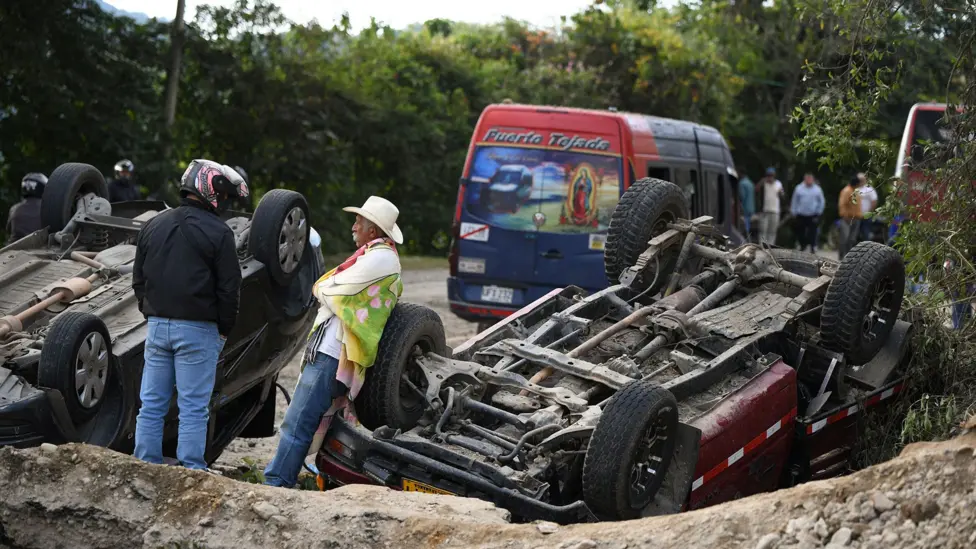
A roadside bombing on Colombia's Pan-American Highway on Saturday has resulted in the deaths of 20 individuals, with an additional 36 sustaining injuries, including children. Visual evidence from the scene depicted severely damaged vehicles and widespread debris across the crucial transport route in the southern Cauca region.
President Gustavo Petro directly attributed the attack to dissident factions of the Revolutionary Armed Forces of Colombia (FARC), while Cauca Governor Octavio Guzman condemned the incident as the most brutal assault on civilians in decades. Guzman released footage on X showing overturned vehicles and craters, describing the bombing as "indiscriminate." He stated, "Cauca cannot continue to face this barbarity alone."
Elections and Peace Efforts
The FARC’s 2016 peace agreement led to the demobilisation of thousands of fighters; however, some elements refused to disarm and continue to operate. President Petro, a former guerrilla fighter, has pursued a contentious peace strategy involving intermittent ceasefires with various armed groups, though efforts to engage FARC dissident offshoots in peace talks have consistently failed. These groups are widely involved in drug trafficking, a core driver of continued conflict.
Defence Minister Pedro Arnulfo Sánchez also reported that a separate bus laden with explosives in the Cauca region failed to detonate earlier on Saturday, which he attributed to a drug-trafficking cartel. This wave of violence, including other smaller attacks reported in Cauca since Friday, arrives just one month before Colombia’s presidential election on 31 May.