UK Commits £662 Million to France for Expanded Channel Migration Enforcement
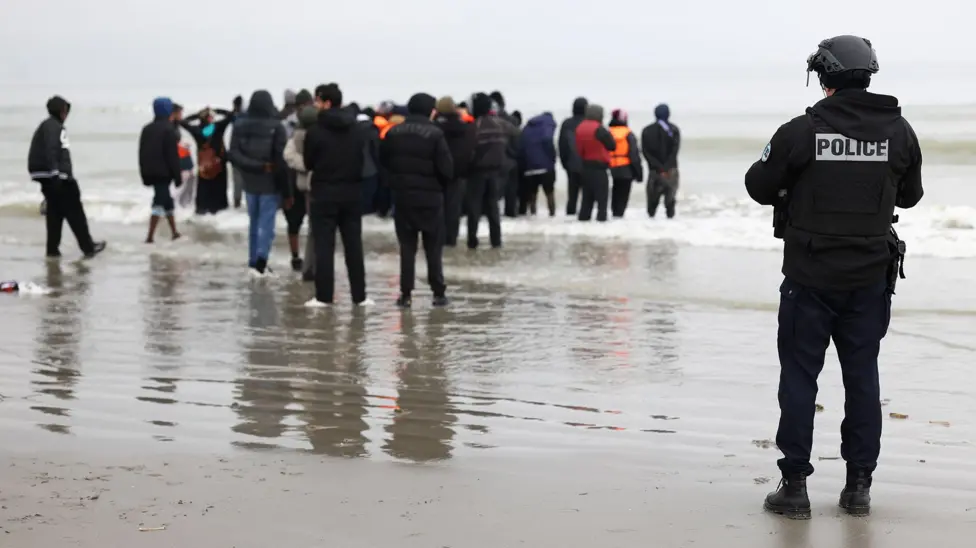
Home Secretary Shabana Mahmood formally signed the three-year accord with France this Thursday, allocating up to £662 million to bolster French operations against irregular migration across the English Channel. The agreement will see at least 50 French police officers, specifically trained in "riot and crowd control tactics," deployed to address potential unrest and "hostile crowds" encountered during interdictions.
Under the terms, France is set to receive significant investment for drones, two helicopters, and an enhanced camera system, aimed at disrupting human smuggling networks and intercepting migrants. A notable clause allows for the potential redirection or withdrawal of approximately £100 million in UK funding after a year, contingent on the effectiveness of French efforts in reducing crossings, though specific targets have not been publicly confirmed.
The Home Office anticipates the completion of a 140-capacity removal centre in Dunkirk by the end of the year. This facility, staffed by over 200 officers, is intended for the deportation of migrants primarily from Eritrea, Afghanistan, Iran, Sudan, Somalia, Ethiopia, Iraq, Syria, Vietnam, and Yemen—nations identified as the top ten origins for small boat arrivals last year. The UK government expects hundreds of migrants annually to be "removed from French beaches" and repatriated or returned to other EU countries.
Mahmood described the agreement as a "landmark" initiative, designed to "really arm us to go after the people smugglers." She highlighted the deal's "flexibility" to adapt to evolving smuggling tactics, stating, "as the business model of the gangs changes, we will change as well in order to disrupt it, to degrade it, to break it down."
French Interior Minister Laurent Nunez commented that the agreement "empowers our security forces to continue their crucial work in combating perilous Channel crossings and strengthening the safety of coastal residents."
This renewed agreement succeeds a 2023 deal, under which the UK provided £476 million to France for patrols. That arrangement, involving some 700 law enforcement officers, was due to expire next month. The new deal increases the number of deployed officers by approximately 42%, bringing the total to nearly 1,100 law enforcement, intelligence, and military personnel in northern France. Furthermore, France will receive a new vessel and over 20 additional maritime officers to target "taxi boats" used by smugglers.
In 2025, 41,472 individuals arrived in the UK via small boats, with over 6,000 arrivals recorded in 2026 to date. Critics, including the Conservative and Reform UK parties, have questioned the efficacy of previous agreements, with Reform UK characterising the current deal as funding "a system that has already failed." Both parties advocate for the UK's withdrawal from the European Convention on Human Rights (ECHR) as a means to curb crossings.
Conversely, refugee and migration advocacy groups argue that increased policing alone will not deter desperate individuals. Imran Hussain of the Refugee Council stated that "without safe routes to reach the UK, these men, women and children will be forced into dangerous and potentially deadly small boat crossings." Meghan Benton, a director at the Migration Policy Institute, suggested that French authorities exhibit a "real floor on how aggressive" they are willing to be in intercepting crowded boats due to safety concerns, often returning migrants to French territory rather than risking capsizing vessels at sea.
A separate "one-in-one-out" arrangement with France, signed in August 2025, has seen 305 individuals returned to France and 367 admitted to the UK as of February this year. Since the current government took office, nearly 60,000 irregular migrants and foreign criminals have been removed or deported from the UK.