UK Defence Spending Shortfall Endangers Forces, Threatens Nato Commitments
The UK’s defence capabilities are under scrutiny following the resignations of two defence ministers, who accused Prime Minister Sir Keir Starmer of failing to adequately fund the nation’s security. This dispute highlights a fundamental disconnect between the government's pronouncements on global threats and its willingness to commit the necessary resources.
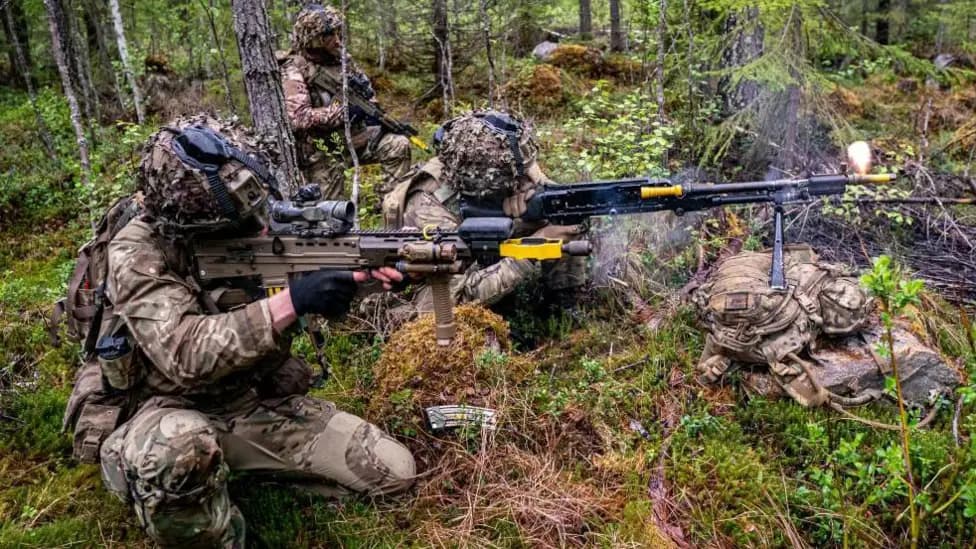
Currently, the government allocates approximately £66 billion to defence. While this supports the UK’s armed forces and nuclear deterrent, successive administrations have presided over a decline in military strength since the Cold War. Despite a stated increase in global dangers, particularly from state actors such as Russia and Iran, defence spending has failed to keep pace. This has led to a contraction of the army, navy, and air force, exacerbated by a history of mismanaged procurement, delivering equipment late and over budget.
The Shifting Geopolitical Landscape and Funding Gap
The contemporary security environment, marked by conflicts in Ukraine and the Gulf, underscores a shift towards drone warfare, cyber capabilities, and space technology, de-emphasising traditional, costly platforms. Concurrently, the United States has intensified demands for European allies to meet their Nato spending obligations, signalling an end to its implicit subsidies for European defence. The UK currently spends 2.3% of GDP on defence, with a stated aim to reach 2.5% by next year and 3.5% by 2035. However, this ambition is not matched by current financial commitments.
The delayed “defence investment plan” was intended to align funding with the objectives outlined in last year’s “strategic defence review”. Defence chiefs initially requested an additional £28 billion over four years merely to fulfil existing commitments. This figure was subsequently reduced to an estimated £13 billion after significant internal contention within Whitehall, prompting John Healey’s resignation. He stated, “I am being forced to make decisions that would reduce the readiness of our Forces and increase the risk to personnel on operations, and could make the country less safe.” Bee Boileau, a research economist at the Institute for Fiscal Studies, noted that £13 billion is the annual amount needed to meet the 3.5% GDP target by 2035, illustrating the scale of the current shortfall over four years.
Uncertainty Plagues Future Defence Procurement
The lack of a concrete defence investment plan has created considerable uncertainty for defence firms and the armed services. While the modernisation of the nuclear deterrent and the Aukus partnership with the US and Australia for new attack submarines may be protected, the future of other critical programmes remains in doubt. Questions persist regarding the full deployment of the army’s AI digital targeting system, the fate of Ajax armoured fighting vehicle orders, the navy’s hybrid uncrewed ships, and the renewal of its frigates. The RAF’s ambitions for 6th-generation fighter jets and its existing F35 orders are also under review. Furthermore, the capacity to restock arsenals of missiles and munitions, depleted by transfers to Ukraine, is a pressing concern.
Al Carns, in his resignation, criticised the procurement of “capability suitable for the last war while our adversaries arm for the next one,” specifically highlighting the need for advanced drones and integrated air defence systems. This uncertainty not only impacts the operational readiness of the UK military but also undermines Britain’s international standing. New Defence Secretary Dan Jarvis is expected to face difficult questions from Nato counterparts in Brussels next week, with the UK reportedly near the bottom of the alliance’s leaderboard for meeting capability targets. The Prime Minister will confront similar scrutiny at a Nato summit in Turkey next month, including from Donald Trump, regarding the UK’s defence spending commitments.