UK Government Embraces Chinese Car Imports Amidst Domestic Production Concerns
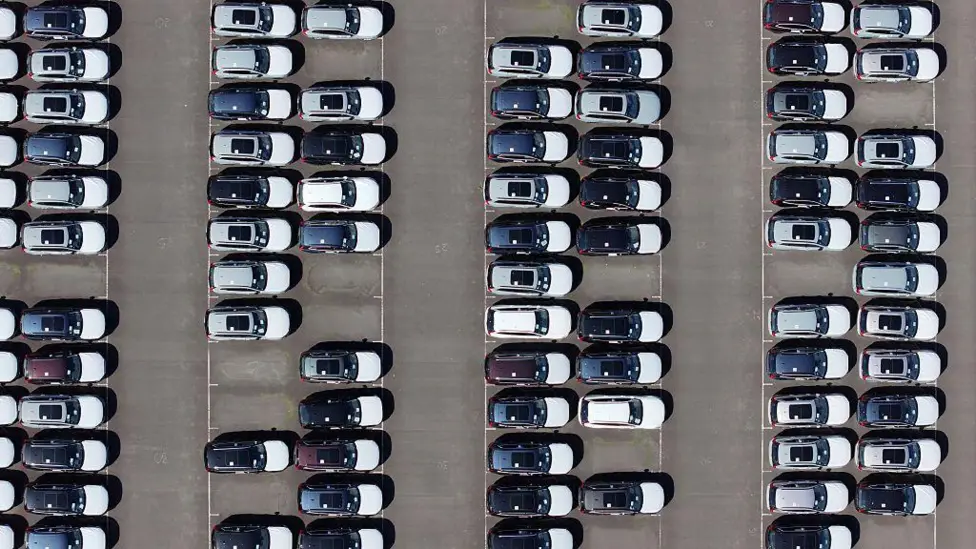
The UK government is adopting a relaxed stance towards the increasing volume of Chinese car imports, arguing that they offer consumers greater choice and could attract valuable investment into the British automotive sector. This position comes as the industry grapples with declining domestic production and a shift towards electric vehicles (EVs).
The Rise of Chinese Imports
Recent data highlighted the burgeoning presence of Chinese manufacturers in the UK market, with a Chinese car, the Jaecoo 7, recently becoming the nation's top-selling vehicle for the first time. More broadly, Chinese-owned brands now account for approximately 15% of new car sales in the UK, a dramatic increase from just 1.3% five years ago.
Business Secretary Peter Kyle articulated the government's perspective, stating that Britain should "not fear" the influx of Chinese imports. He emphasised a desire for UK consumers to have access to a wide range of vehicles, while also actively seeking to encourage Chinese car makers to establish manufacturing facilities in the UK, drawing parallels to Japanese investment in the 1990s. The government recently confirmed a £380m grant to Tata Group for its Agratas EV battery gigafactory in Somerset, an investment seen as crucial for the future of British car manufacturing.
Domestic Challenges and Political Division
Despite the government's optimism, the UK's car production has halved over the last decade, raising concerns about the competitiveness of domestic manufacturers against foreign imports. Opposition parties have voiced strong criticism. Shadow Business Secretary Andrew Griffith attributed the decline to government regulations aimed at phasing out petrol and diesel vehicles, which he argued had "sucked in imported EVs." Reform UK's Robert Jenrick went further, advocating for tariffs and quotas to protect British jobs against what he termed "unfair Chinese competition," citing actions taken by the EU and the US.
Market Dynamics and Future Prospects
Mike Hawes, Chief Executive of the Society of Motor Manufacturers and Traders (SMMT), acknowledged the rapid progress of Chinese firms, attributing their success to offering "attractive products at very competitive prices, good tech and good build quality." The UK's decision not to impose tariffs on Chinese imports, unlike some G7 allies, has likely contributed to the accelerated growth of Chinese sales and subsequent investment in dealer networks across the country.
The Agratas gigafactory in Somerset is viewed as a vital component in the UK's efforts to compete technologically and secure its automotive future, enabling a domestic supply chain for EVs. While the UK remains dependent on foreign expertise and investment, its open approach to Chinese automotive expansion positions it differently from other major economies, anticipating a continued rise in China's global car exporting power.