UK Seeks Closer European Ties Amid Global Instability, But Challenges Remain
UK Prioritises European Rapprochement in Volatile Global Climate
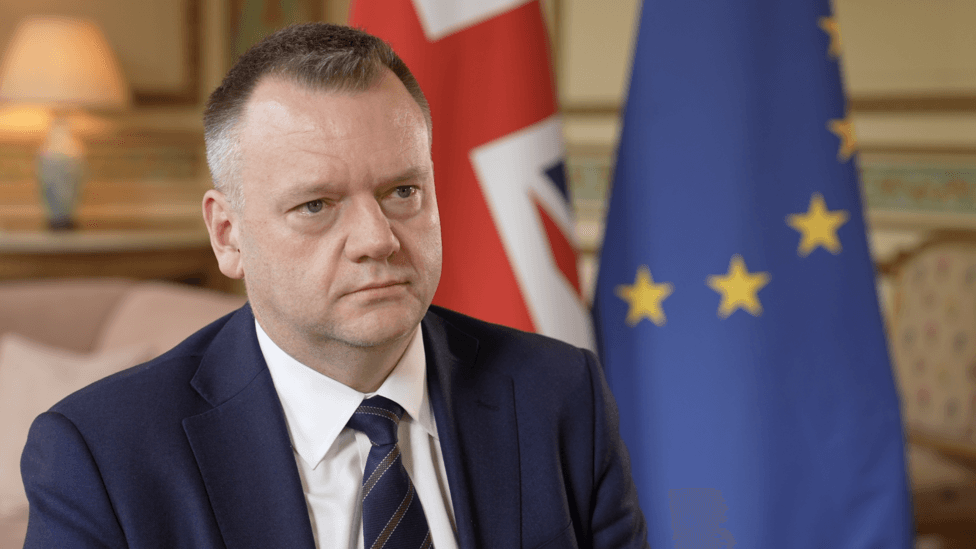
In an era marked by significant global volatility, including the protracted conflict in Ukraine, escalating energy prices, and strains on the global economy, the United Kingdom is actively pursuing a more collaborative relationship with its European neighbours. Nick Thomas-Symonds, the UK's minister for EU relations, recently articulated an "ambitious" and "ruthlessly pragmatic" approach, focusing on areas of vital national interest.
This renewed impetus for closer ties is underpinned by a public sentiment increasingly open to such collaboration, driven by the current geopolitical landscape. Cooperation is particularly evident in security and defence, exemplified by a unified stance on Ukraine and intentions for joint armaments procurement.
Economic Alignment and Future Prospects
A key focus for the government lies in strengthening economic ties. Nearly a decade after the Brexit referendum, Prime Minister Sir Keir Starmer has pledged to streamline post-Brexit bureaucracy and reduce costs for UK businesses engaged with the EU, the nation's largest export market. Upcoming initiatives include a food and agricultural safety agreement, a deal on carbon emissions trading, and a youth "experience" programme. Furthermore, the UK has rejoined the EU's Erasmus+ scheme, facilitating educational opportunities for young people.
These efforts, the government maintains, respect the outcome of the Brexit vote and adhere to manifesto commitments against rejoining the EU, its single market, or customs union. However, critics from various political factions argue that "aligning" with EU standards effectively positions the UK as a "rule taker," contradicting the original promise to "take back control."
Costs and Sovereignty: The Ongoing Debate
While Brussels welcomes closer relations, any agreements are framed by its own interests. The UK's participation in schemes like Erasmus+ and Horizon comes with significant financial contributions, though proponents highlight the UK's emergence as a leading beneficiary in research programmes. Negotiations for access to the EU's internal electricity market, deemed paramount for energy security, could also entail contributions to the EU cohesion fund, a point of contention.
The government insists its sector-specific approach leverages national sovereignty effectively. However, the more the UK aligns with EU rules, the more complex it may become to forge independent trade agreements globally, including with the United States. While the minister for EU relations maintains the "special relationship" with the US remains strong, recent tensions and a limited bilateral trade agreement underscore the nuanced path the UK is now navigating between its European and transatlantic partners.