Ukraine Secures Gulf Drone Deals, EU Loan Amid Iran War, US Focus Shifts
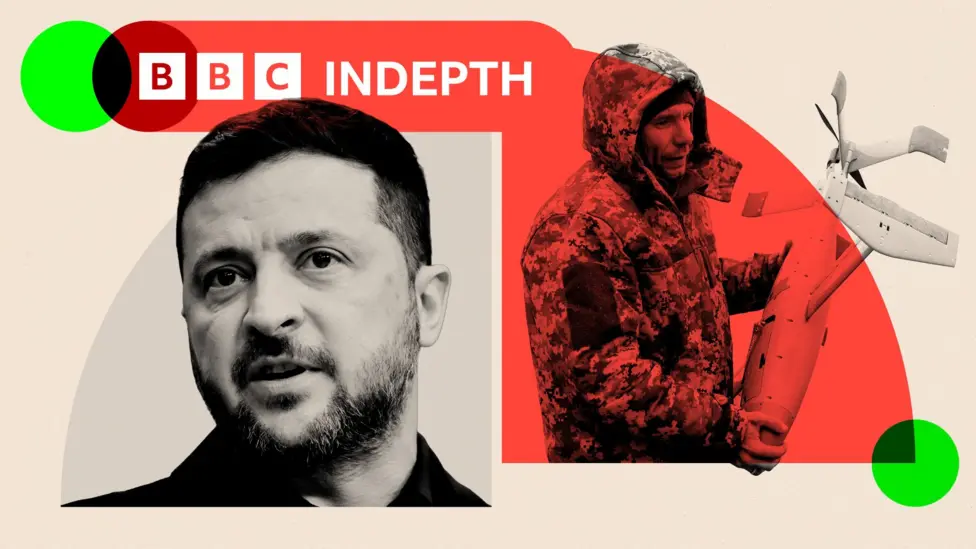
Ukrainian President Volodymyr Zelensky travelled to Saudi Arabia in March, seizing an unexpected opportunity presented by the US-Israeli conflict in Iran. Zelensky announced deals with Saudi Arabia, the UAE, and Qatar to share drone expertise and technology. These Gulf states have recently experienced Iranian missile and drone attacks.
Kyiv states these agreements tighten alliances and secure business and potential defence deals with wealthy US-aligned nations. Zelensky affirmed, "We want to help [Gulf states] defend themselves. And we will continue building such partnerships with other countries."
Shifting Geopolitics Aid Ukraine
Initially, the US-Israeli war in Iran appeared detrimental to Ukraine, threatening to redirect US attention and funding. The conflict has boosted Russian oil revenues, as tankers carrying Middle Eastern oil face challenges crossing the Strait of Hormuz, leading to increased global prices and renewed waivers for Russian oil purchases.
However, Ukraine has adapted. Zelensky's administration has focused on bolstering its military capabilities and international alliances. Ukraine signed two substantial defence cooperation agreements with European allies in April: a $8.6 billion deal with Norway as part of a $28 billion support package until 2030, and a $4.7 billion agreement with Germany for various drones, missiles, software, and modern defence systems.
Ukraine is also applying lessons from the Iran conflict to target Russia's energy infrastructure with long-range drones. Zelensky claims Russia is suffering "critical" losses, amounting to billions of dollars, despite the global oil price surge. While Russian crude oil export data initially showed a revenue increase, Ukrainian drone strikes reduced earnings by $1 billion in a single week, eradicating much of the previous gains.
Further aiding Kyiv, a €90 billion EU-backed loan, previously blocked by Hungary's former pro-Kremlin prime minister, was finally approved after a change in Hungarian leadership. The new, less Russia-friendly leader took office following an election where public anger over rising energy costs, linked to the Iran war, contributed to the previous administration's defeat.
US Priorities and Peace Prospects
Despite these gains, the prospect of a peace deal between Ukraine and Russia remains uncertain. US President Donald Trump has made repeated statements about a quick "solution" following conversations with Vladimir Putin, yet a concrete resolution has not materialised. Trump's designated peace envoys, Jared Kushner and Steve Witkoff, have repeatedly postponed trips to Kyiv, preoccupied with the Middle East. Zelensky has publicly deemed their absence "disrespectful." The US National Security Strategy, published late last year, conspicuously omits labelling Russia as a security threat, a stark contrast to the views of Washington's European NATO allies. The strategy’s focus on Ukraine is geared towards "strategic stability" and potential partnership with Russia, aiming to free up resources for other US priorities, a stance welcomed by the Kremlin.
Critics argue that the US has failed to implement truly impactful economic sanctions against Russia and that military and economic assistance for Ukraine has largely dried up. European nations are now purchasing military hardware from the US for Kyiv, but even this supply is threatened by US commitments in the Middle East. Zelensky has expressed a desire for Middle Eastern states to provide air defence missiles to Ukraine.
The London School of Economics' Luke Cooper notes that a rational Russian government would end the war, given economic stagnation and significant military losses. However, he contends that Putin's imperial ambitions dictate decisions, not rational economic advantage. European leaders, while expressing a desire for peace, have been accused of "managing" the war rather than aggressively pursuing an end to it, often waiting for US leadership on more decisive sanctions.
Concerns also persist regarding the EU's reluctance to utilise €210 billion in frozen Russian central bank assets, opting instead for taxpayer-backed loans. Royal Services Institute's Tom Keatinge argues that Europe could act with greater impact but lacks the unity or political will to do so. The prospect of a ceasefire also raises difficult questions for Europe, including the controversial issue of Ukraine’s EU membership and the long-term commitment of a "reassurance force."
Washington has remained publicly dismissive of Ukraine's drone technology sales in the Gulf and has not publicly accepted Zelensky's offer to share Kyiv's drone expertise. Zelensky, however, appears undeterred, hoping that continued visibility keeps Ukraine on the international agenda and prompts a quicker return of US attention to the region.