United Arab Emirates Exit Threatens OPEC Influence Over Global Oil Markets After Six Decades
The United Arab Emirates' (UAE) stated intention to withdraw from the Organisation of the Petroleum Exporting Countries (OPEC) is viewed by analysts as a substantial blow to the cartel, with some suggesting it signals "the beginning of the end of OPEC." This development occurs as the oil market navigates considerable instability, particularly with disruptions stemming from the US-Israel war with Iran impacting global supply.
OPEC's Diminishing Reach
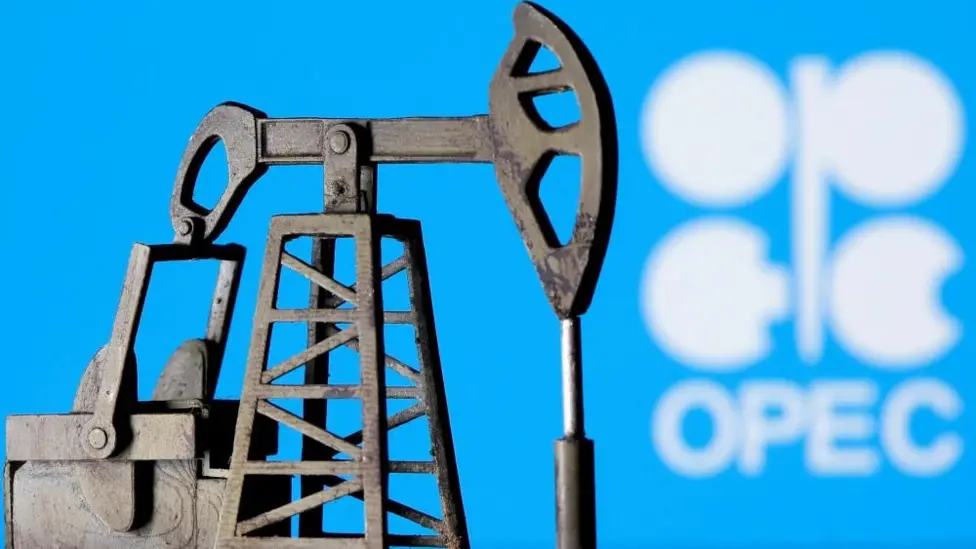
Founded in 1960 by Iran, Iraq, Kuwait, Saudi Arabia, and Venezuela, OPEC aimed to protect major oil exporters' interests by coordinating production. The organisation influences global oil prices by adjusting member states' output. Reducing supply is intended to sustain high prices, while increasing it aims to lower them by ensuring ample availability.
Historically, OPEC's effectiveness in price manipulation has "varied," according to Maurizio Carulli, global energy analyst at Quilter Cheviot. He notes that individual members frequently disregard agreed production quotas, increasing output for greater market share or decreasing it due to technical issues, citing Kazakhstan and the UAE as past examples.
The UAE was the world's third-largest oil exporter in 2025, according to OPEC data, behind Saudi Arabia and Iraq, producing 3.1 million barrels daily. Experts anticipate that outside the cartel, the UAE could increase its production by approximately one million barrels per day.
Shifting Power Dynamics
OPEC's overall influence on global oil markets has waned since the 1970s. Its share of global crude oil production has fallen from over half (52.5%) in 1973 to 36.7% in 2025. Non-OPEC producers, including the US, Canada, and Brazil, have absorbed this diminished share. The US has been the leading oil-producing nation since 2018, with Russia also a major player.
Carulli suggests that influence over oil prices has "shifted" towards the US in recent weeks, primarily because Gulf OPEC members are presently unable to export their oil due to the ongoing closure of the Strait of Hormuz. While the waterway remains blocked, the UAE's immediate departure will have "zero" short-term impact on exports.
Charles-Henry Monchau, CIO of Swiss private bank Syz Group, asserts that the UAE's exit marks the "end of Opec as we knew it." He highlights that while the cartel has endured numerous global events, it has "never really survived the loss of a founding-era major producer." Monchau concludes that "Opec will continue, but with materially less ability to set prices."