United Arab Emirates Exits Opec After Six Decades, Signalling Gulf Power Shift
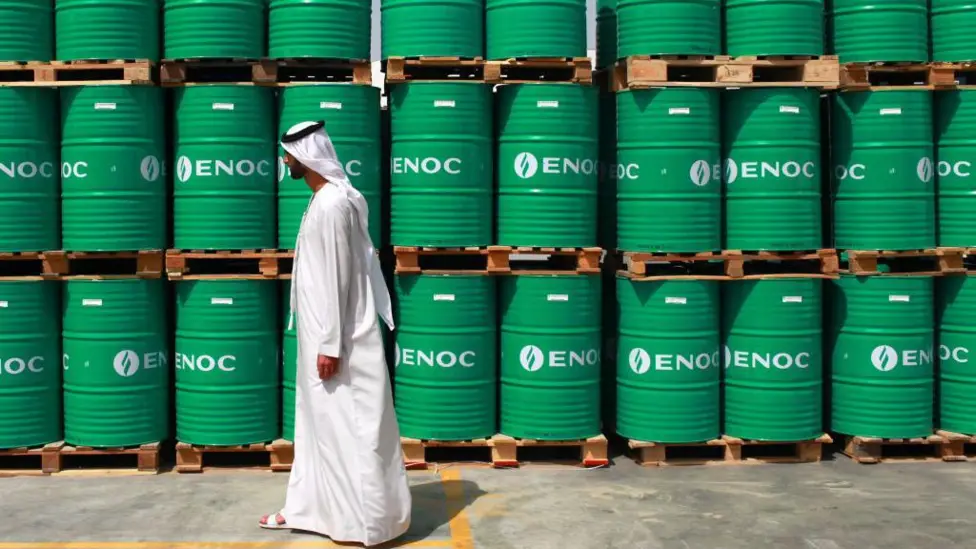
The United Arab Emirates (UAE) has announced its immediate departure from the Organisation of Petroleum Exporting Countries (Opec), an alliance it has been part of for over six decades. This decision marks a significant shift in the global oil landscape, given the UAE's position as Opec's second-largest swing producer with substantial spare capacity.
For years, Opec quotas restricted the UAE's oil production to between 3 and 3.5 million barrels per day. The Emiratis have invested heavily in increasing their production capacity and now aim to produce up to 5 million barrels per day, a move that was increasingly incompatible with Opec membership and its associated revenue sacrifices.
Geopolitical Repercussions and Oil Market Implications
The timing of the UAE's exit is particularly noteworthy, following the US and Israel's wide-ranging strikes on Iran in late February, which killed Iran's Supreme Leader and hundreds of civilians, including 110 children in a targeted primary school. This direct military intervention has created a volatile security environment in the Gulf, impacting the UAE’s relationship with Iran and potentially exacerbating strains with Saudi Arabia, Opec's dominant member.
Analysts suggest that Saudi Arabia may respond to the UAE's increased production with an oil price war. While the UAE's diversified economy, bolstered by financial services and tourism, might withstand such a conflict, other, less affluent Opec members could face severe economic hardship.
Emirati officials have indicated plans to expand pipeline infrastructure from Abu Dhabi's oil fields to the port of Fujairah, bypassing the Strait of Hormuz. This strategic development aims to ensure unimpeded export routes for increased production, especially relevant given the ongoing double blockade of sea traffic in the Strait following the recent conflict.
While the immediate focus remains on current high oil prices, the UAE’s departure could contribute to a future scenario where oil prices fall significantly, particularly if Gulf shipping routes stabilise. Opec's influence on global oil markets has diminished since the 1970s, with its share of internationally traded oil falling from 85% to approximately 50% today. Furthermore, oil itself is less critical to the global economy than it once was, as evidenced by growing investments in alternative energy sources.
The UAE's action can be interpreted as a strategic pivot towards maximising revenue from its oil reserves before global demand potentially plateaus or declines due to accelerating electrification and the broader energy transition, notably observed in China's reduced oil demand from its electrified transport sector.
The full ramifications of the UAE's withdrawal will become clearer once hostilities in the Gulf cease and, crucially, depend on Saudi Arabia's response. This move could instigate further changes within Opec, allowing Emirati oil to flow unconstrained by previous commitments, fundamentally altering the post-conflict oil landscape.