Xi Jinping Visits North Korea, Seeks Influence Amid Pyongyang's Deepening Russia Ties
Chinese leader Xi Jinping has visited North Korea, a move observers suggest is less about fraternal solidarity and more about Beijing's strategic leverage over its neighbour. China seeks stability on its border and continued influence in Pyongyang, without being entangled in crises stemming from North Korea's nuclear ambitions. This diplomatic engagement follows concerns in Beijing regarding the growing partnership between Pyongyang and Moscow.
Reasserting Beijing's Stance
Western diplomatic sources indicate China is increasingly uneasy about the burgeoning alliance between North Korea and Russia. Following his recent meeting with Russian President Vladimir Putin, Xi may be aiming to ensure North Korean leader Kim Jong Un remains within Beijing's sphere of influence, especially as China expands its global footprint.
The previous coolness in relations between Beijing and Pyongyang was evident, with subdued commemorations for their 75th anniversary of diplomatic relations in October 2024. China's ambassador did not attend North Korea's founding celebrations the preceding month, and high-level exchanges were notably absent throughout the year, contrasting sharply with Pyongyang's warming ties with Moscow.
The Russia-North Korea Nexus
Pyongyang's expanded military cooperation with Russia, following the invasion of Ukraine, culminated in a mutual defence pact signed during Putin's 2024 visit to Pyongyang. Investigations suggest thousands of North Korean soldiers have fought for Russia in Ukraine, and Pyongyang is accused of supplying ammunition in exchange for oil and aid. This development has alarmed Washington and its allies, and quietly unsettled China.
Ankit Panda, a nuclear policy specialist, noted that China aims to protect its interests concerning North Korea at a time of rapid convergence between Moscow and Pyongyang. China possesses only one formal defence treaty, which is with North Korea, making a scenario where Russia becomes the dominant influence in Pyongyang undesirable for Beijing. A more self-assured Kim, less dependent on China, would diminish Beijing's leverage.
Beijing's Recalibration Efforts
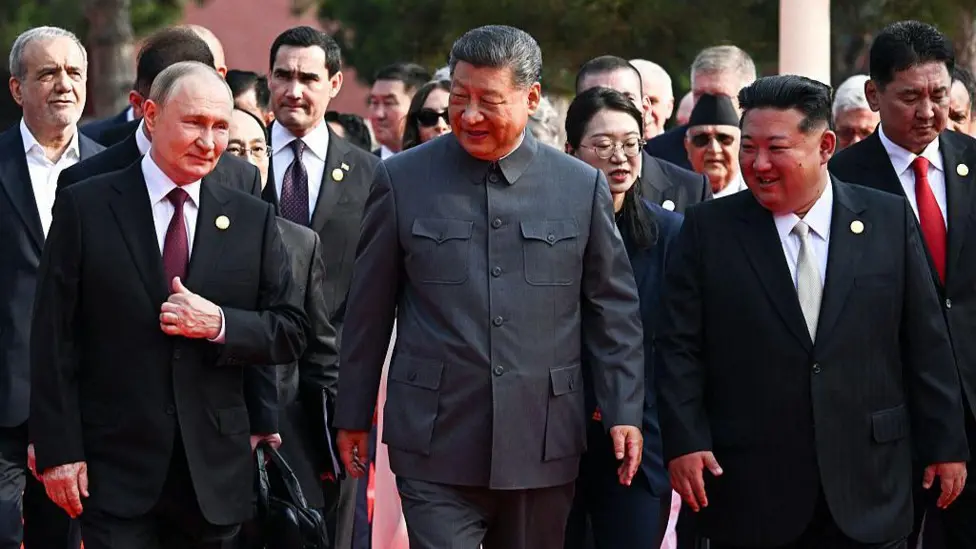
Beijing has responded by attempting to reset the relationship. Late last year, Xi invited Kim to a military parade in Beijing, positioning him prominently alongside Putin. This marked their first formal summit in six years, where Xi praised the two as “good neighbours, good friends and good comrades bound by a shared destiny”, calling for closer strategic coordination. Public statements notably omitted any mention of North Korea’s nuclear arsenal.
Lee Seong-hyon, a visiting scholar at Harvard University, suggests Beijing holds “mixed feelings” about the Pyongyang-Moscow partnership. While it “distracts Washington and complicates US strategy in multiple theaters, which indirectly benefits China,” an expanding military alliance could provoke a stronger trilateral response from the US, Japan, and South Korea, causing concern in Beijing.
China’s reluctance to endorse Pyongyang's nuclear programme stems from a desire to avoid increased US involvement in the region and its alliances. However, Beijing also avoids direct confrontation on the issue; in 2022, China and Russia vetoed a US-led UN resolution to impose new sanctions over North Korea’s missile tests. Victor Cha, president of the foreign policy department at the Center for Strategic and International Studies, posits that a strong Chinese stance against Pyongyang’s nuclear programme would merely push North Korea further into Russia’s orbit.
Economic Lifeline and Strategic Dependence
Kim, however, cannot afford to alienate China, his primary source of aid. China's exports to North Korea surged to approximately $2.3 billion last year, the highest in six years. Passenger train services between Beijing and Pyongyang also resumed earlier this year after a six-year hiatus. Analysts interpret these actions as a deliberate effort by Beijing to draw Pyongyang back into its orbit.
For Kim, this represents a pragmatic choice. If the conflict in Ukraine concludes, Russia’s need for North Korean support could diminish. Furthermore, unlike an isolated Putin, Xi has been hosting numerous world leaders in Beijing. Therefore, Kim needs to ensure he is not left reliant on a potentially weakening partner.
The relationship between the two nations has always been complex. Kim Jong Un, unlike his father, prioritised accelerating North Korea’s nuclear programme, overseeing numerous ballistic missile tests and nuclear detonations in his early years. This alarmed Beijing, and the execution of Kim’s uncle, Jang Song Thaek, seen as a stabilising figure by China, exacerbated the rift.
Xi responded with rare diplomatic signals of displeasure, visiting South Korea in 2014 before meeting Kim – a move widely perceived as a snub. North Korea retorted by labelling China a “turncoat and our enemy.” It was not until 2018, as international sanctions intensified, that Kim made his first known foreign trip to Beijing, initiating a cautious recalibration.
Today, North Korea acts as both a buffer and a burden for China. It helps to keep US forces at a distance but its weapons tests destabilise the region. Kim, meanwhile, seeks Chinese protection without Chinese control. Neither side fully trusts the other, yet for now, their mutual perceived necessity ensures continued dialogue.