Bank of England Deputy Sarah Breeden Warns Global Stock Markets Face Downward Adjustment
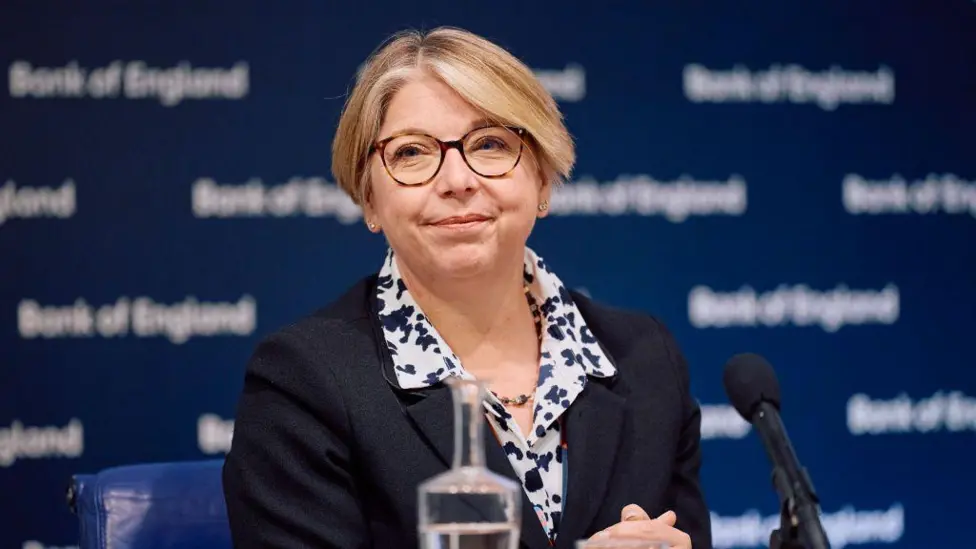
The Bank of England anticipates a decline in global stock markets, as current share prices do not adequately reflect the numerous risks confronting the world economy, according to its Deputy Governor.
Sarah Breeden, who also leads the Bank's financial stability efforts, noted, "There's a lot of risk out there and yet asset prices are at all-time highs. We expect there will be an adjustment at some point." This direct assessment of market movements by a senior Bank figure is considered uncommon.
Breeden refrained from specifying the timing or scale of any projected market downturn but enumerated several factors she believes markets are overly complacent about. Her primary concern is "the likelihood of a number of risks crystallising at the same time – a major macroeconomic shock, confidence in private credit goes, AI and other risky valuations readjust - what happens in that environment and are we prepared for it?"
A significant fall in stock markets typically impacts the economy by reducing household wealth, potentially curbing consumer spending. Businesses may also struggle to secure funding, leading to reduced investment and hiring. The US stock market, home to the world's largest corporations, has recently achieved record highs despite warnings from the International Energy Agency about an unprecedented global energy shock.
The substantial investment in Artificial Intelligence infrastructure by technology firms has drawn comparisons to the dot-com bubble of the late 1990s, when speculative investments often preceded company failures and significant value losses. Bill Gates, co-founder of Microsoft, described the cash flow into the AI sector as "a frenzy."
Another area of apprehension is the growth of non-bank financial institutions that provide private lending to businesses. These funds have recently experienced losses and restricted investor withdrawals, prompting concerns about systemic weaknesses. Breeden highlighted that this "shadow banking" system, which has grown to $2.5 trillion over the last 15-20 years, remains untested under a market downturn. "It's a private credit crunch, rather than a banking-driven credit crunch, that we're worried about," she stated.
While the UK's FTSE 100 index is also nearing its own all-time high, it lacks the large AI companies driving US market records. Breeden emphasised that her role is to ensure the financial system's resilience should a market correction occur, rather than to predict its exact timing or magnitude.
Russ Mould, investment director at AJ Bell, commented on the unusual nature of a Bank of England official issuing such an explicit warning. He noted that while Breeden's concerns are familiar to the market, investors appear "comfortable with the risks and that they believe any problems can be contained."