Bank of England Holds Rates at 3.75% as US-Iran Deal Calms Oil Markets
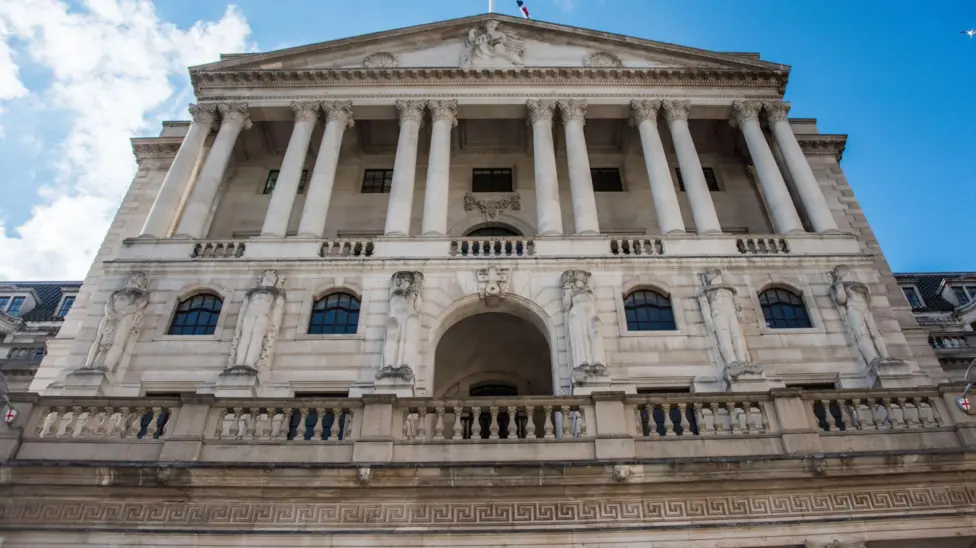
The Bank of England (BoE) is widely anticipated to keep its benchmark interest rate at 3.75% following the latest meeting of its Monetary Policy Committee (MPC). This decision, expected for the fourth consecutive time, comes as global economic observers assess the implications of a recently announced US-Iran peace deal.
Inflation, the rate at which prices rise, remains above the target set by the BoE. However, Wednesday's official figures from the Office for National Statistics (ONS) indicated that inflation held at 2.8% for the year to May. This figure was lower than analysts' predictions, largely due to a slowing pace in food price increases.
The US-Iran agreement, confirmed by US President Donald Trump, is set to facilitate the reopening of the Strait of Hormuz. This vital waterway, a conduit for a fifth of global oil and gas supplies, has seen traffic disrupted since the initial conflict. Consequently, oil prices have fallen close to their pre-conflict levels, as traders forecast renewed free-flowing shipping, thereby alleviating some of the most severe projections for energy price inflation.
Despite this, analysts still anticipate an acceleration of price rises in the UK during the summer. This is attributed to the delayed effect of higher wholesale energy costs on domestic gas and electricity bills. Ofgem's price cap, which governs millions of UK households' energy expenses, is scheduled to increase by 13% in July. The European Central Bank, in contrast, recently raised its interest rate, citing inflationary pressures stemming from the wider conflict.
The BoE's base rate directly influences the lending rates offered by banks and building societies for mortgages and the interest rates paid on savings. Since the onset of the Iran conflict in March, the average rate for a new two-year fixed mortgage has risen to 5.60% from 4.83%, according to Moneyfacts.