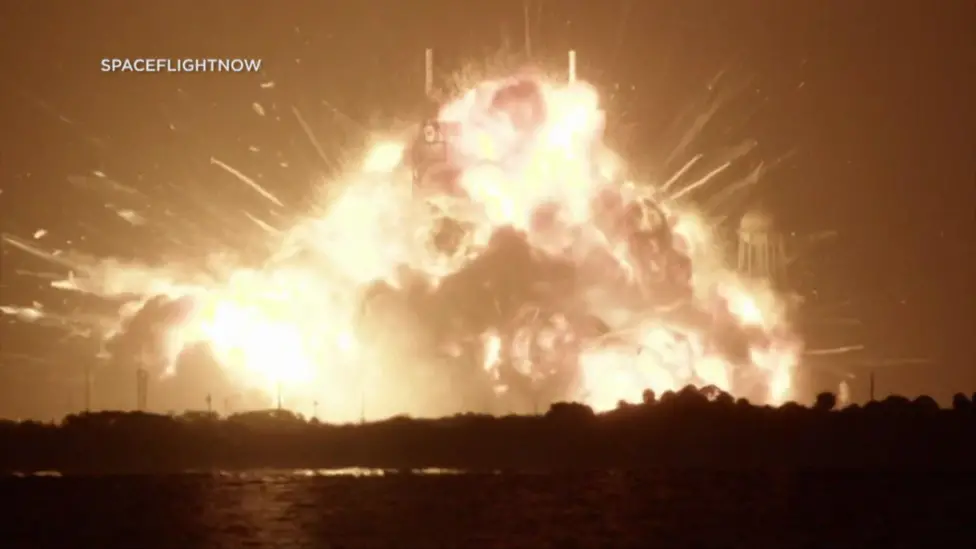
Blue Origin New Glenn Rocket Explosion Disrupts NASA Lunar Base and Amazon Satellite Deployment
A Blue Origin New Glenn rocket exploded at Space Launch Complex 36 (LC-36) at Florida's Kennedy Space Centre during a routine engine test, causing extensive damage to the launch facility. While no personnel were injured, the incident has introduced considerable uncertainty for NASA's lunar exploration programme and Amazon's satellite broadband network.
The 98-metre rocket, intended to launch 48 satellites for Amazon's Leo network as early as 4 June, is now scattered across LC-36. This setback creates a substantial commercial problem for Amazon, which faces a 30 July 2026 deadline from the US Federal Communications Commission (FCC) to have half of its 3,236-satellite constellation in orbit. With Blue Origin's primary launch capability grounded for an anticipated period of months, Amazon will become even more reliant on rival launch providers, notably SpaceX, and will likely require an FCC timetable extension.
For NASA, the ramifications are equally severe. The explosion directly impacts the agency's plans for a 'permanent presence' at the Moon's south pole. The first mission, Moon Base 1, scheduled for autumn 2026, relies on Blue Origin's Blue Moon Mark 1 'Endurance' lander, which was slated to launch aboard a New Glenn rocket. Furthermore, a recent $468 million contract for Blue Origin to deliver two commercial lunar terrain vehicles to the Moon by 2028 is also contingent on the New Glenn platform.
NASA Administrator Jared Isaacman acknowledged the difficulty of developing heavy-lift launch capability. This incident places NASA's 2028 target for a crewed lunar landing and its broader Moon base initiative under increased scrutiny, particularly as China advances its own lunar ambitions with a target of landing astronauts by 2030.