Brazil Curbs Amazon Deforestation, Global Forest Loss Slows in 2025 as El Niño Threat Looms
Global tropical rainforest loss decreased by approximately one-third in 2025, with nearly 43,000 square kilometres of old-growth tropical forests vanishing – an area comparable to Denmark. This reduction follows record losses in 2024, yet experts from the World Resources Institute and the University of Maryland caution that these vital ecosystems are still being destroyed at a rate significantly higher than a decade prior.
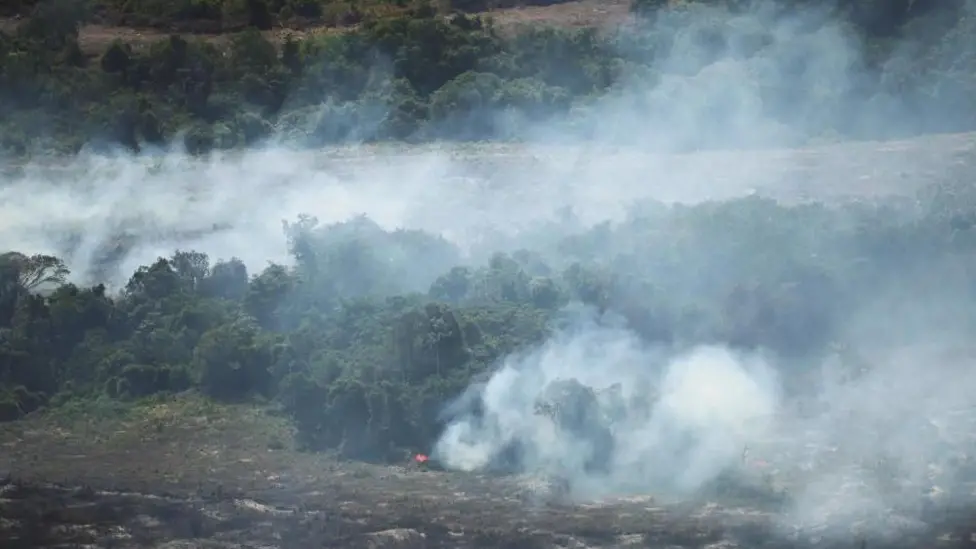
A critical concern for the coming year is the dual threat of climate change and the anticipated El Niño weather pattern. This combination is expected to escalate the frequency and intensity of forest fires, potentially undermining any progress made in curbing deforestation.
Brazil's Policy Impact on Forest Preservation
The latest analysis reveals a 36% decline in tropical forest loss in 2025. This downturn is partly due to the absence of the unprecedented fires observed in 2024, which were exacerbated by the warming El Niño. However, researchers also attribute this improvement to more robust conservation efforts, particularly in Brazil, Colombia, and Malaysia.
In Brazil, home to the largest segment of the Amazon rainforest, strengthened environmental policies and enforcement have demonstrably slowed deforestation. Excluding fire-related losses, an estimated 5,700 square kilometres of old-growth tropical forests were destroyed in Brazil last year, marking the lowest figure since data collection began in 2002. Elizabeth Goldman, co-director of Global Forest Watch, highlighted that this outcome underscores the tangible results achievable when political will is aligned with forest protection.
Global Commitments and Looming Threats
Tropical rainforests are biodiversity hotspots and crucial carbon sinks, absorbing vast quantities of planet-warming carbon dioxide. However, they face sustained pressure from agricultural expansion, logging, and climate change, which fosters conditions conducive to large-scale fires.
Despite world leaders pledging at the 2021 COP26 climate summit in Glasgow to "halt and reverse" forest loss by 2030, progress remains significantly off track. Rod Taylor, Global Director for Forest and Nature Conservation at the World Resources Institute, emphasised the need to enhance forest resilience against increasingly intense fires and droughts driven by climate change.
Professor Matthew Hansen of the University of Maryland warned that "climate change and land clearing have shortened the fuse on global forest fires." Without immediate and effective action to manage fire, he cautioned, the world's most critical forests risk being pushed beyond recovery.