British Army Conducts Covert NATO Wargames in Disused Charing Cross Underground Station
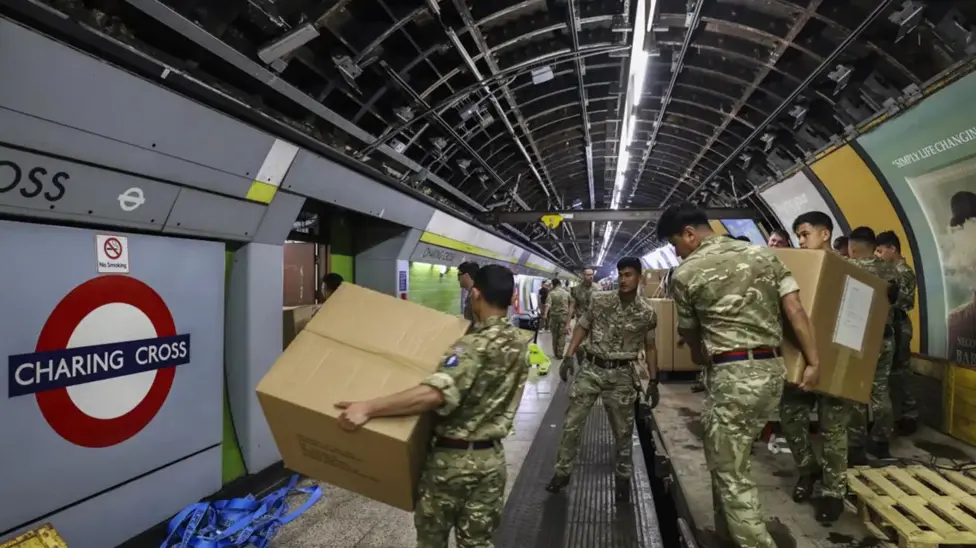
The British Army recently utilised a disused section of the London Underground in central London to conduct a covert NATO military exercise. This operation, codenamed 'Arrcade Strike', involved hundreds of British soldiers planning a response to hypothetical future Russian attacks.
Described as one of the most ambitious military exercises in a generation, 'Arrcade Strike' was a command post exercise led by the British Army's Allied Rapid Reaction Corps (ARRC), NATO’s deployable corps headquarters. Its purpose was to assess ARRC's capability to plan and command large-scale military operations, involving an estimated 100,000 personnel from the UK and its NATO allies.
A commander involved in the exercise noted the shift in operational environments: "We have moved from operating in tents and open environments, to commercial buildings, to aircraft hangars, and now to underground locations." The rationale for this move was clear: "Operating below ground significantly reduces our signature, makes us harder to find, and improves our chances of surviving attack."
An army spokesperson affirmed this as a practical lesson derived from the conflict in Ukraine and observed among NATO partners on Europe's eastern flank. "Getting underground is not a novelty, it's a survival strategy," the spokesperson stated. The Charing Cross tunnels were chosen for their disused status, ample space for a full command post, and their central London location, demonstrating the viability of such operations in complex urban environments.
The spokesperson emphasised the contemporary threat perception: "The war in Ukraine has reminded the world of a hard truth: threats to peace in Europe are not distant or theoretical. Russia has mobilised its entire economy, industry and military for war. The security of every Nato country is at stake." From the concealed Charing Cross location, troops coordinated activities across land, sea, air, space, and cyberspace, all within a fictional 2030 scenario, when military planners anticipate the Russian threat could be most severe.
Maintaining the covert nature of the high-tech operation was crucial. Corporal Ismaila Ceesay, an information management specialist, recounted arriving in civilian attire and changing into uniform only after passing secure barriers. Major Joe Harris, tasked with establishing the command post unnoticed, highlighted the unique challenges of the subterranean environment compared to traditional warehouse locations, noting the constrained layout and warren of tunnels.