Britons From Hantavirus-Hit MV Hondius Cruise Ship Face Tests Before UK Return
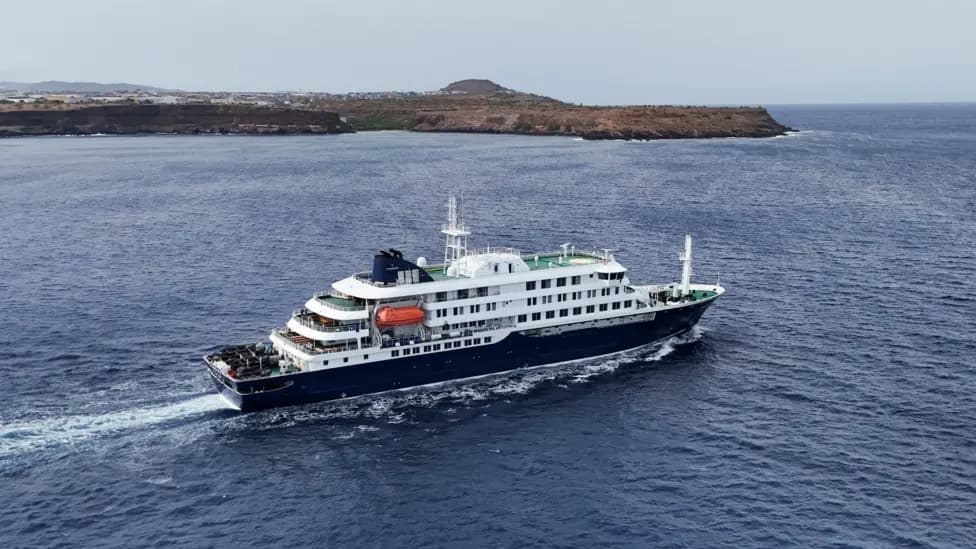
British passengers and crew on the MV Hondius cruise ship, which has experienced a hantavirus outbreak, will be tested by Spanish officials in Tenerife before being allowed to return to the UK.
The vessel is anticipated to dock in the Canary Islands this weekend, with the remaining 22 Britons scheduled for a charter flight home shortly thereafter. Five cases of hantavirus have been confirmed, including one of three passenger fatalities during the Dutch-flagged ship's voyage.
Two British men with confirmed hantavirus are currently receiving treatment in the Netherlands and South Africa. A third Briton is undergoing treatment for a suspected case on the remote Atlantic island of Tristan da Cunha, where the ship made a stop in mid-April.
Repatriation and Isolation Protocols
Upon the MV Hondius's arrival in Tenerife on Sunday, passengers and crew will undergo onboard virus testing. Symptomatic individuals will be transferred to local hospitals for treatment. Those without symptoms will be directly transported to a chartered aircraft for immediate repatriation to the UK.
Despite no current symptoms among the returning Britons, they will be required to self-isolate and self-test for 45 days upon their return, either at home or in designated accommodation. This self-isolation will be voluntary, without legislative enforcement, though medical staff support for blood tests will be provided.
British national Martin Anstee, a 56-year-old retired police officer and expedition guide, was evacuated to the Netherlands and is in stable condition. Another British passenger, 69, with a confirmed case, was medically evacuated to South Africa in late April and remains in intensive care, reportedly 'doing better'.
Tracing and International Response
Four other Britons who disembarked at St Helena remain there, symptom-free but in contact with health officials. A military plane has delivered medical supplies to Ascension Island, a British territory, for distribution to St Helena and Tristan da Cunha.
Contact tracing is ongoing in several countries for passengers who left the ship before the outbreak was identified. The World Health Organisation (WHO) has labelled it a 'serious incident' but assesses the public risk as low, distinct from the Covid-19 pandemic. The origin of the outbreak remains unknown, as does the extent of infection beyond the ship's manifest.
WHO Director-General Tedros Ghebreyesus stated that initial cases had travelled through Argentina, Chile, and Uruguay on a bird-watching trip, visiting sites known to harbour the virus-carrying rat species. Hantavirus typically spreads from rodents, but experts are considering potential human-to-human transmission in this specific instance, particularly with 'close and prolonged' contact. Symptoms, including fever, fatigue, and shortness of breath, typically manifest two to four weeks post-exposure.