China Condemns US Indictment of Raúl Castro, Demands End to Coercion Against Cuba
China has called for the United States to end its "coercion" and "threats" against ally Cuba, following Washington's indictment of former leader Raúl Castro on murder charges.
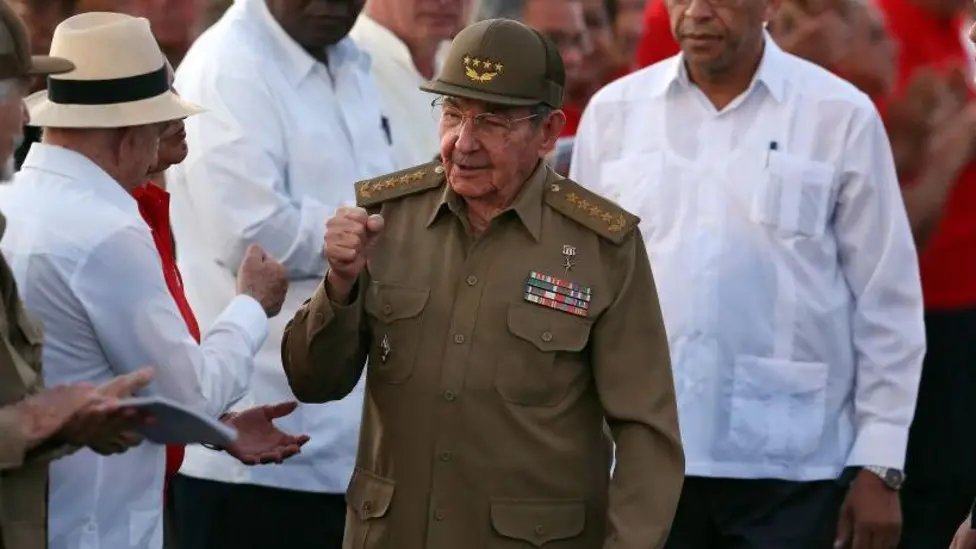
A US court has accused the 94-year-old former president of conspiracy to murder US nationals in connection with the 1996 downing of two aircraft, an incident that resulted in four fatalities and exacerbated diplomatic tensions between Washington and the island nation.
US President Donald Trump has consistently sought to pressure Cuba, openly discussing the potential overthrow of its communist government.
On Thursday, Chinese foreign ministry spokesman Guo Jiakun stated that the US should "stop threatening force at every turn" and affirmed Beijing's "firm support for Cuba".
Castro, alongside five other individuals, was charged on Wednesday for involvement in the shooting down of two planes three decades ago, which were travelling between Cuba and Florida. The charges carry potential penalties of life imprisonment or death. The aircraft, operated by the Cuban-American dissident group Brothers to the Rescue, carried three US citizens who were killed in the incident. At the time, Castro, who stepped down as president in 2018, was head of Cuba's armed forces.
Cuban President Miguel Díaz-Canel has dismissed the charges as "a political manoeuvre, devoid of any legal foundation".
The Chinese foreign minister reiterated Beijing's opposition to "any attempt by external forces to exert pressure on Cuba under any pretext". Guo emphasised, "The United States should cease using sanctions and judicial apparatus as tools of coercion against Cuba and refrain from making threats of force at every turn." He concluded by stating, "China resolutely supports Cuba in safeguarding its national sovereignty and dignity and opposes external interference."
This diplomatic condemnation comes as the White House continues to intensify pressure on Cuba. The US has implemented new sanctions and imposed an oil blockade, leading to power outages and food shortages on the island. Earlier this month, Trump signed an executive order sanctioning Cuban officials across energy, defence, financial, and security sectors, alongside individuals accused by the US of human rights abuses or theft of public assets.
Following the capture of former Venezuelan President Nicolás Maduro in January to face trial in the US on narco-terrorism and drug trafficking charges, Trump has openly speculated that Cuba is "ready to fall". China and Cuba have strengthened ties since President Xi Jinping's 2014 visit, with Cuba joining China's Belt and Road Initiative in 2018, which has funded several infrastructure projects on the island.