China Implements Zero Tariffs for 53 African Nations, Excludes Eswatini from Trade Deal
China has formally abolished tariffs for 53 African countries, commencing 1 December. This duty-free regime, which expands upon an existing policy covering 33 least-developed African nations, is scheduled to conclude on 30 April 2028. Beijing characterises this move as a pioneering unilateral zero-tariff offering to Africa by a major global economy.
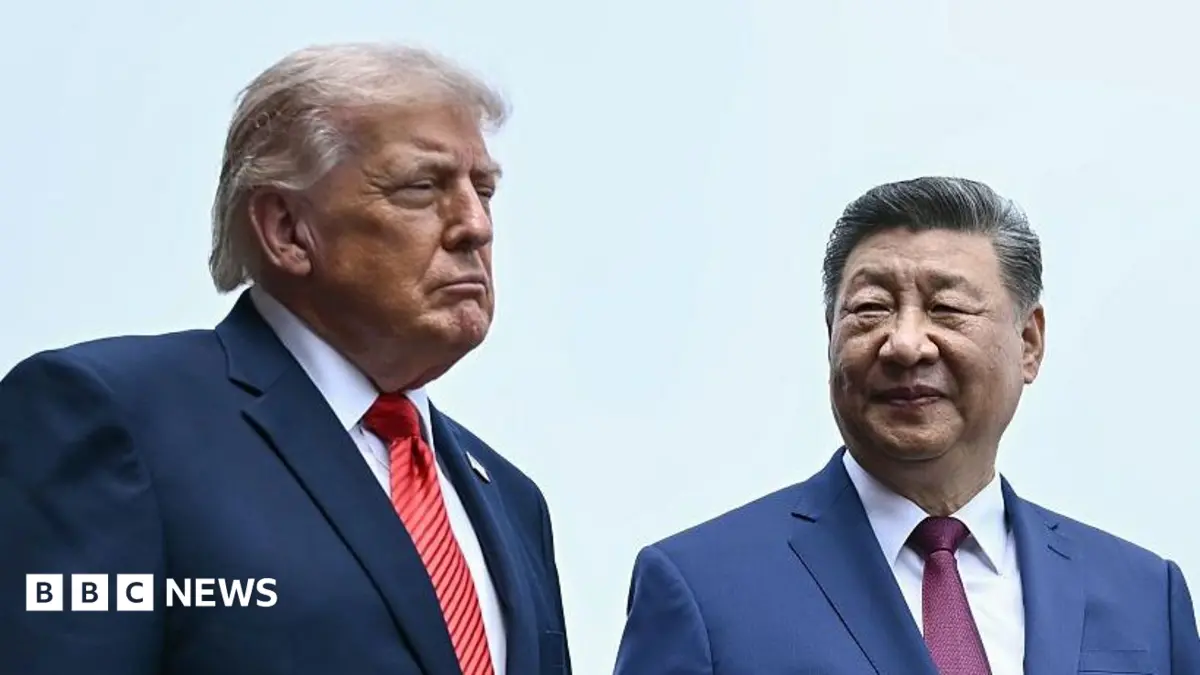
However, analysts contend that while China seeks to enhance its soft power and position itself as a trade liberaliser, tariffs are rarely the principal barrier for African exporters. Lauren Johnston, a senior research fellow at the AustChina Institute, noted, "China is positioning itself as the trade liberaliser and Africa-friendly economic partner, in contrast to Donald Trump and the US."
Despite potential benefits for specific agricultural sectors and rural incomes, particularly in countries like Kenya, the policy does not address the fundamental structural imbalances in Sino-African trade. Africa's trade deficit with China escalated by 65% last year, reaching approximately $102 billion. African exports remain heavily concentrated in raw materials, such as crude oil and metallic ores.
Jervin Naidoo, a political analyst at Oxford Economics Africa, stated, "Many African economies still face structural constraints, such as limited industrial capacity, weak logistics, and a reliance on raw commodity exports, which tariff reductions alone cannot address." Alfred Schipke, director of the East Asian Institute in Singapore, concurred that immediate economic impact would likely be modest and confined to African nations already possessing export capacity.
The exclusion of Eswatini is widely perceived as a political manoeuvre. Eswatini is one of only 12 nations maintaining diplomatic ties with Taiwan, which Beijing claims as an integral part of China. Wen-Ti Sung, a political scientist at the Australian National University's Taiwan Centre, suggested that China is "weaponising its ties with African countries, and showing how relations with China comes up with strings attached," illustrating how Beijing treats its allies versus those aligned with Taiwan.