England's Health Visitors Face 1,000-Family Caseloads, Institute Demands Staffing Limits
The Institute of Health Visiting (iHV) has called for the immediate introduction of limits on the “unmanageable” caseloads faced by health visitors in England. Some practitioners are reportedly responsible for more than 1,000 families each, a stark contrast to other UK nations where safe staffing limits are typically around 250 families per health visitor.
Workforce Decline and Its Impact
Over the last ten years, the number of health visitors in England – qualified nurses or midwives providing early years support – has plummeted by 45%. Figures show a drop from 10,200 a decade ago to just 5,575 in January. This significant reduction in staff has forced health visitors to take on an increasing number of families, even as review appointments have largely returned to pre-pandemic levels.
Last year, the government's redeployment of health visitors during the pandemic was criticised as “fundamentally flawed” during the Covid inquiry. This decision exacerbated existing staffing issues, leaving families without crucial early intervention.
Alison Morton, iHV chief, warned that families are bearing the brunt of this decline. “We need to set a benchmark, otherwise we’re just going to continue to see this decline with hugely unmanageable, unsafe caseloads which are impossible for health visitors to work within,” she stated. Morton highlighted the human cost of prioritisation, where health visitors are forced to decline follow-up visits that could make a significant difference to family wellbeing.
Missed Opportunities and Inconsistent Care
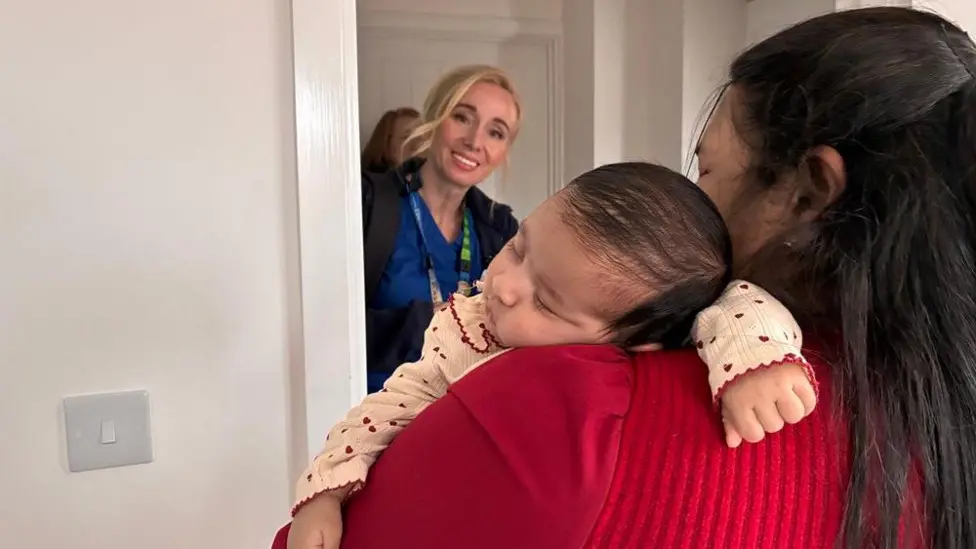
Current NHS and government guidelines recommend five health visitor appointments for families from late pregnancy until a child is two years old, with the initial three visits ideally conducted in the family home. However, this is not consistently occurring across England.
Elita and Adam, parents to 11-week-old twins in Staffordshire, experienced their six-week check in a clinic rather than at home. Elita noted the added stress of transporting two newborns and expressed concern that home visits offer a more comprehensive understanding of family dynamics. Furthermore, despite new guidelines for the Healthy Child Programme advocating for continuity of care, Elita has not seen the same health visitor for each appointment.
In contrast, families in Scotland receive 11 mandatory health visitor visits, and those in Northern Ireland receive nine, offering substantially more proactive support. Health visitor Ruth Watts underscored the “missed opportunities” arising from high workloads, where vulnerable families might struggle to access timely support for issues like mental health. Watts, who now shares advice on social media, warned that while online resources are expanding, they are no substitute for face-to-face interaction, which is vital for identifying abuse, neglect, and maternal mental health concerns.
Government Response
The Department of Health and Social Care (DHSC) stated its commitment to “strengthening health visiting services” and confirmed that plans for the profession would be outlined later this year. A spokesperson acknowledged a decade of “underinvestment” and pledged to build on health visitors' trusted relationships to help protect more children.