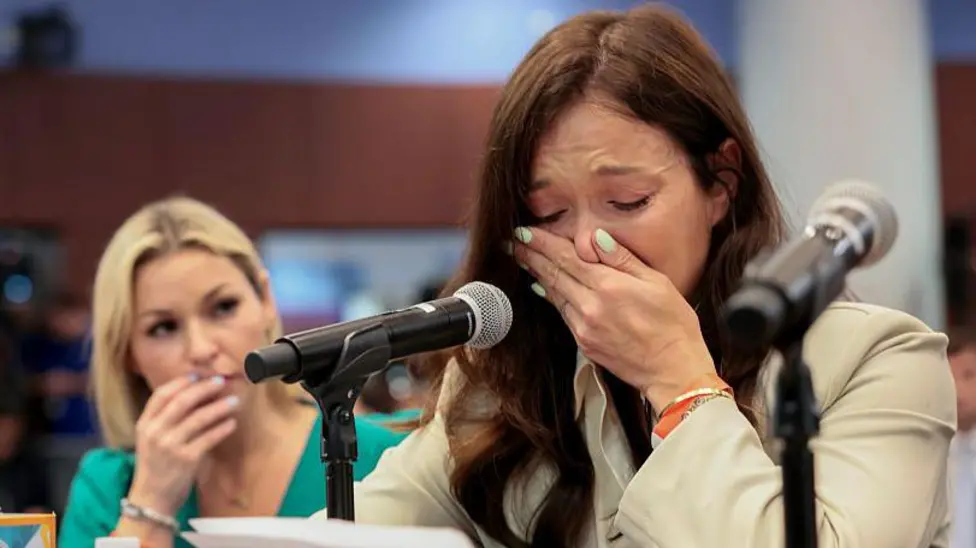
Epstein Survivor Roza Details Three Years of Sexual Abuse Under House Arrest
A survivor of Jeffrey Epstein’s abuse, identified only as Roza, has given public testimony detailing how the financier sexually abused her over three years while he was under house arrest for soliciting prostitution from a minor.
Roza, recruited from Uzbekistan as a teenager by Epstein’s associate Jean-Luc Brunel, spoke at a field hearing organised by US House Democrats in West Palm Beach, Florida. She described being introduced to Epstein by Brunel in July 2009, offered work by Epstein “to help me with my financial troubles”, and subsequently subjected to repeated rape.
House Democrats Scrutinise Justice System Failures
Democratic lawmaker Robert Garcia stated the hearing was held in West Palm Beach, near Donald Trump’s Mar-a-Lago residence, because it was where Epstein’s “crimes first came to light.” The session, lacking legal authority, aimed to maintain public focus on the Epstein case and scrutinise the handling of Epstein files by the Trump administration.
Roza, 18 when she met Brunel in 2008, recounted being “promised a modelling career beyond my dreams.” She arrived in New York City on a visa by May 2009 and met Epstein in Florida in July, where he offered her a role at his Florida Science Foundation. Epstein was then permitted to leave custody for up to 16 hours a day, six days a week, following his 2008 conviction for soliciting prostitution from a minor.
“One day his masseuse called me into his room where I was molested for the first time by Jeffrey,” Roza testified. “For the following three years I was subject to ongoing rape.”
Epstein died in a New York prison cell in August 2019, awaiting trial on sex trafficking charges. A report by Democratic oversight committee members found his controversial 2008 plea deal enabled him to “continue his abuse and trafficking activities for almost another decade.”
Roza stated the abuse under house arrest “made justice feel impossible,” and criticised the Department of Justice (DOJ) for accidentally publishing her name in the Epstein files. “Now reporters from across the globe contact me. I cannot live without looking over my shoulder,” she stated. The DOJ has attributed such errors to “technical or human error.”
Another survivor, Maria Farmer, provided a recorded message, accusing law enforcement of repeated failures to act since she first reported Epstein’s abuse in 1996, asserting, “The government needs to start telling the truth.”