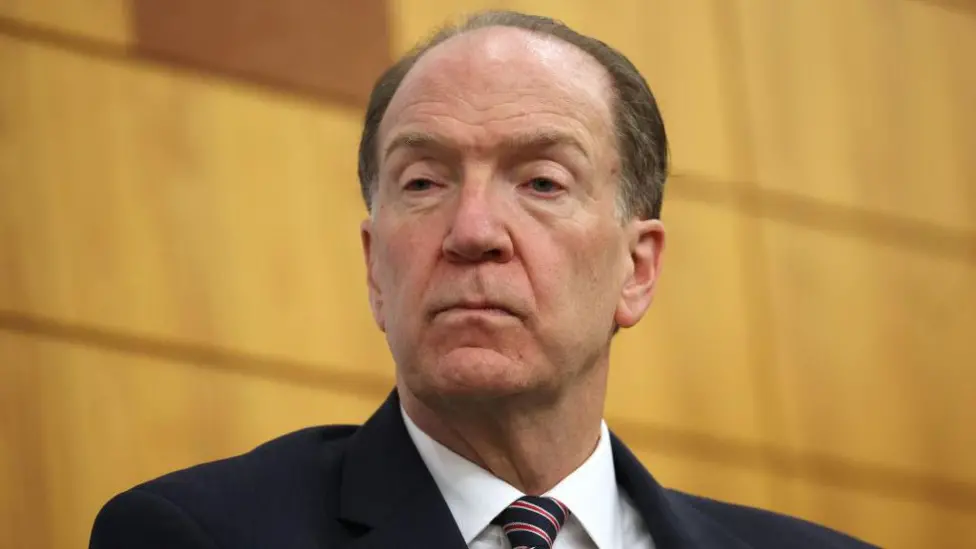
Former World Bank Chief David Malpass Demands China Release Global Food and Fertiliser Stockpiles
David Malpass, the former president of the World Bank, has urged China to cease its accumulation of global food and fertiliser stockpiles. He contends that Beijing's release of these reserves is crucial to mitigating a worldwide supply crisis, intensified by the conflict in Iran and the ensuing disruption to shipping through the Strait of Hormuz.
China's Stockpiles and Developing Nation Status
Malpass, who served as Treasury Under Secretary for International Affairs during the Trump administration, stated that China possesses the "biggest world stockpile of foodstuffs and of fertiliser," and could "stop building their stockpiles." These comments were made ahead of a Trump-Xi summit in Beijing, as nations globally struggle to secure fertiliser for spring planting, following China's own cessation of fertiliser exports since March to protect domestic supplies.
Furthermore, Malpass criticised China's continued self-identification as a developing nation, despite its status as the world's second-largest economy. He argued that this designation, maintained within organisations like the World Trade Organisation and the World Bank, is no longer credible and should be suspended.
Strait of Hormuz and Global Trade
Addressing the Iran ceasefire, which former US President Trump described as being on "massive life support," Malpass called for international unity in demanding a resolution. He stressed that a "rogue state with plutonium" and the blocking of the Strait of Hormuz are unacceptable. Malpass expressed hope that China would assist in resolving the deadlock in the Strait of Hormuz, noting that unhindered maritime movement serves Beijing's economic interests. He highlighted that China benefits significantly from global trade and shipping, owning container lines and profiting from international commerce, thus making it a "big loser" if Iran were to gain control over the vital waterway.
Regarding the US economic outlook, Malpass predicted rising prices across numerous products, ahead of upcoming US inflation data. However, he also pointed to "robust" jobs data as an indicator of the American economy's resilience.