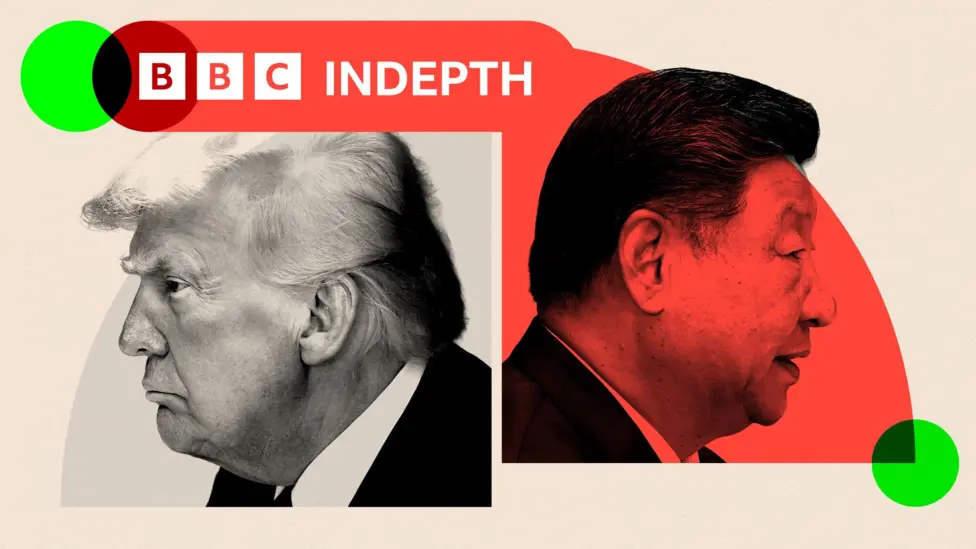
Trump and Xi Summit in Beijing: Global Trade, Taiwan, and Technology at Stake
Security has been heightened around Beijing’s Tiananmen Square in anticipation of US President Donald Trump’s visit, a choreographed display of China’s readiness for high-stakes diplomacy. The visit, including talks, a banquet, and a tour of the Temple of Heaven, is designed to set the course for years of engagement between the world’s two most formidable powers.
China’s Economic Stakes in Iran Conflict
While President Trump has prioritised domestic issues and military operations, the Beijing summit marks a shift in focus towards US-China relations. China has actively positioned itself as a mediator in the US-Israel war against Iran, alongside Pakistan, proposing a five-point plan for a ceasefire and the reopening of the Strait of Hormuz. This diplomatic push is underpinned by China’s economic concerns, as the conflict has led to increased oil prices and manufacturing costs, exacerbating a slowdown in its export-reliant economy. Despite robust oil reserves and advancements in renewables, the war poses significant challenges.
US Secretary of State Marco Rubio’s remarks to Iranian Foreign Minister Abbas Araghchi in Beijing underscore Western scrutiny of China’s influence in the Middle East. The US is also urging China not to block a UN Security Council resolution condemning Iranian shipping attacks, following an earlier joint veto by China and Russia. Experts like Ali Wyne of the International Crisis Group acknowledge China's indispensable role in any lasting resolution with Iran.
Taiwan: A Persistent Flashpoint
The Trump administration's messaging on Taiwan remains contradictory. Following an $11 billion arms deal with Taiwan, President Trump has simultaneously downplayed US commitment to the island's defence, citing Taiwan's purported lack of financial reciprocity and accusing it of intellectual property theft. Chinese Foreign Minister Wang Yi has stressed Taiwan’s priority in these talks, with Beijing intensifying military pressure through daily naval and aerial manoeuvres around the island. Analysts suggest China may press for stronger US declarations against Taiwan independence, moving beyond Washington’s current stance of not supporting it.
Navigating the Trade and Technology Landscape
The summit will also address persistent trade disputes. While a previous Supreme Court ruling curtailed Trump’s unilateral tariff powers, the US leader is expected to push for increased Chinese agricultural purchases. China, in turn, will likely demand an end to US trade probes that could reinstate higher tariffs. Michael O'Hanlan of the Brookings Institute notes the difficulty for the US in abandoning investigations into widespread Chinese unfair trade practices. The accompanying delegation of US corporate executives, including those from Nvidia, Apple, and Boeing, highlights the commercial interests at play.
Competition in cutting-edge technologies, particularly Artificial Intelligence (AI) and robotics, forms another critical agenda item. US policymakers accuse China of systematic technology theft, leading to export restrictions on advanced microprocessors. This dynamic has been termed the “opening chapter of an AI cold war,” where the contest extends to securing talent for developing next-generation AI. China, while adept at robotics manufacturing, relies on US-made high-end chips. This dependence provides Beijing with leverage, particularly given its near-monopoly on rare earth minerals, essential for modern technology. A potential exchange of Chinese rare earths for US chips could form a significant trade-off. Observers suggest that the success of the visit hinges on Trump feeling respected, with any perceived slight potentially destabilising future bilateral relations.