Hungarians Vote in Pivotal Election as Orbán Seeks Fifth Term
Today, Hungarians cast their votes in a general election that poses a significant challenge to Prime Minister Viktor Orbán's long-standing rule. After 16 years, Orbán faces a formidable opponent in Péter Magyar, whose grassroots Tisza party has rapidly gained traction, threatening to reshape the nation's political landscape and its relationships with the European Union and Russia.
A Tense Political Climate
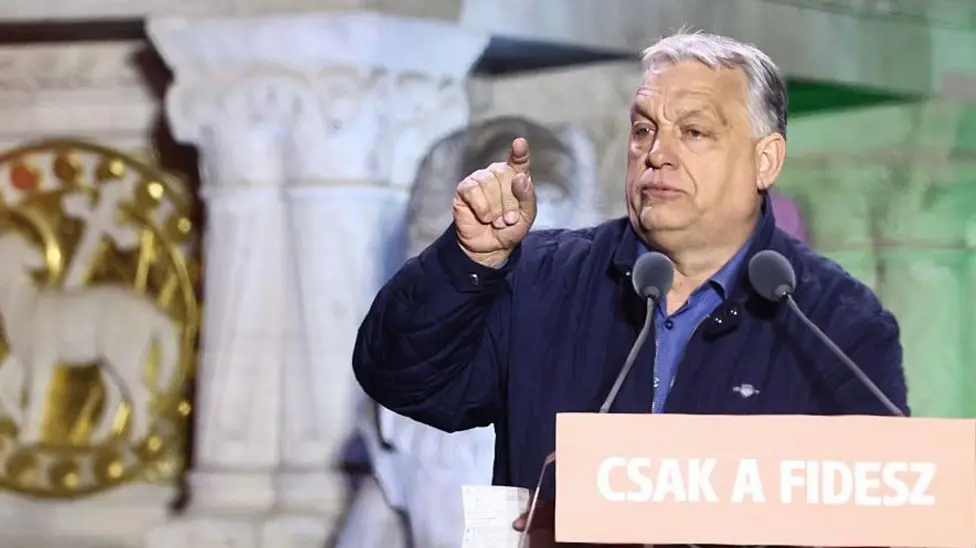
The campaign has been marked by heightened rhetoric. Orbán, addressing supporters on Budapest's Castle Hill on the eve of the election, expressed defiance, stating, "We are going to achieve such a victory that will surprise everyone, perhaps even ourselves." He reiterated his core campaign themes, criticising Brussels and aid to Ukraine, proclaiming, "We don't give our children, we don't give our weapons and we don't give our money."
Conversely, Magyar has campaigned on a promise of "a change of regime," advocating for a reset of EU relations and an end to close ties with Russia. His final rally in Debrecen reportedly drew a larger crowd than Orbán's Budapest event, signalling considerable public support. Magyar has urged voters not to succumb to "Fidesz pressure and blackmail."
The Stakes and Economic Headwinds
Orbán's tenure, described by the European Parliament as a "hybrid regime of electoral autocracy," has seen Hungary repeatedly rank low on Transparency International's Corruption Perceptions Index. Despite four consecutive electoral victories, a fifth term appears less certain amidst a struggling economy and recent scandals, including revelations about the Foreign Minister's communications with his Russian counterpart. Orbán's vetoing of €90bn (£78bn) in aid to Ukraine has also strained relations with European partners.
Election specialists indicate a substantial lead for Magyar's Tisza party in pre-election polling. While an absolute majority for Tisza is deemed likely, a two-thirds super-majority – necessary to roll back Fidesz's constitutional changes to the judiciary and media – remains a possibility.
The Electoral System and Potential Outcomes
Hungary's complex electoral system, which Orbán himself has admitted benefits his party, combines single-member constituencies with proportional representation. Results are expected to emerge this evening, though a final outcome could take several days, particularly in closely contested "battleground seats." There are concerns that an Orbán victory might lead to accusations of electoral fraud and potential street protests, although a recent anti-Fidesz concert in Heroes' Square was peaceful.
Many voters, particularly younger generations, are prioritising a change in leadership. As one 20-year-old student noted, "More important is that someone changes these politicians in the parliament." This election represents a pivotal moment for Hungary, with profound implications for its future direction and standing within Europe.