Iranian Missile Attack on Ras Laffan Complex Cripples Qatar's LNG Exports, Gulf Economies Face Prolonged Strain
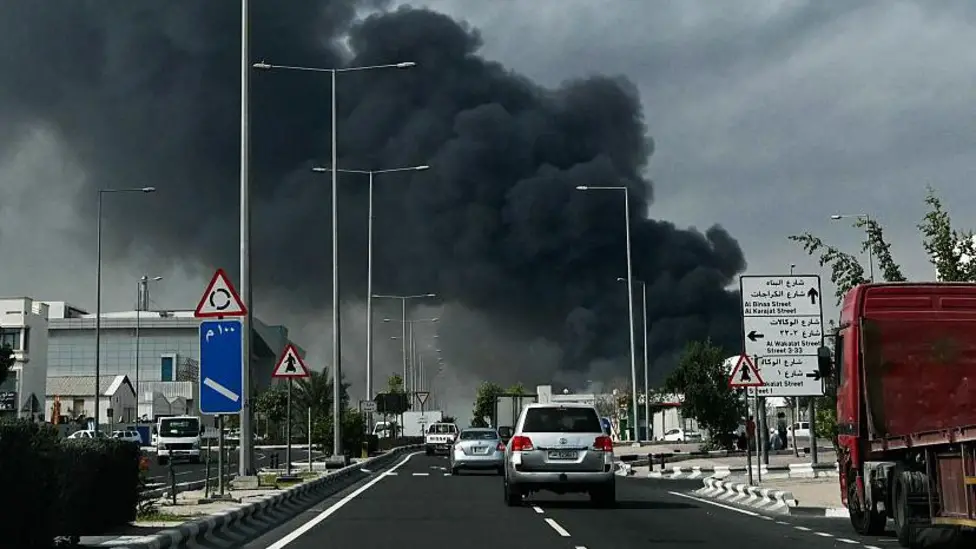
An Iranian ballistic missile strike on 18 March directly hit Qatar's primary Ras Laffan gas complex, a pivotal hub responsible for a substantial portion of global Liquefied Natural Gas (LNG) exports. This singular incident is projected to reduce global LNG supply by an estimated 17%, with QatarEnergy facing predicted annual revenue losses of $20 billion. Repairs to the vital facility could extend over three to five years, disrupting deliveries to key Asian markets.
This attack followed a prior Israeli assault on Iran’s South Pars gas field, which shares the world’s largest natural gas reserve with Qatar's North Dome field. The broader conflict initiated by US and Israeli strikes on Iran on 28 February has resulted in more than 80 infrastructure hits across the Gulf, with over a third suffering severe damage, according to the International Energy Agency. Bahrain, Kuwait, Saudi Arabia, and the United Arab Emirates have also reported significant damage.
Economic Fallout and Strait of Hormuz Closure
The World Bank has reduced its Middle East growth forecast to 1.8% for the current year, warning of long-term economic 'scarring' for the region. Qatar and Kuwait are anticipated to experience the most significant economic contractions. The closure of the Strait of Hormuz, a critical maritime passage for approximately 20% of global oil and LNG flows, has severely compounded the economic pressure. Gulf producers are now forced to utilise alternative, less efficient pipelines, such as Saudi Arabia's East-West pipeline and the UAE's Fujairah pipeline, which together cannot manage half the volumes typically transported through Hormuz.
Beyond energy infrastructure, the economic repercussions are evident across various sectors. Travel and tourism, a core component of diversification strategies in several Gulf economies, is particularly affected. The Middle East is estimated to be losing around $600 million daily in tourism revenues. Dubai’s hospitality and travel-related businesses report substantial declines, leading to job losses. Concerns are also emerging regarding broader financial system stresses, though the UAE has downplayed suggestions of needing external financial backing.
The ongoing instability could force Gulf states to re-evaluate their investment strategies, potentially scrutinising significant commitments in Western economies. Unless a durable resolution to the conflict with Iran is secured, particularly one guaranteeing the continued operation of the Strait of Hormuz, the economic strain on the region is expected to intensify, prompting preparations for an extended period of instability.