Morgan McSweeney Admits "Serious Mistake" Recommending Lord Mandelson for US Ambassador Role
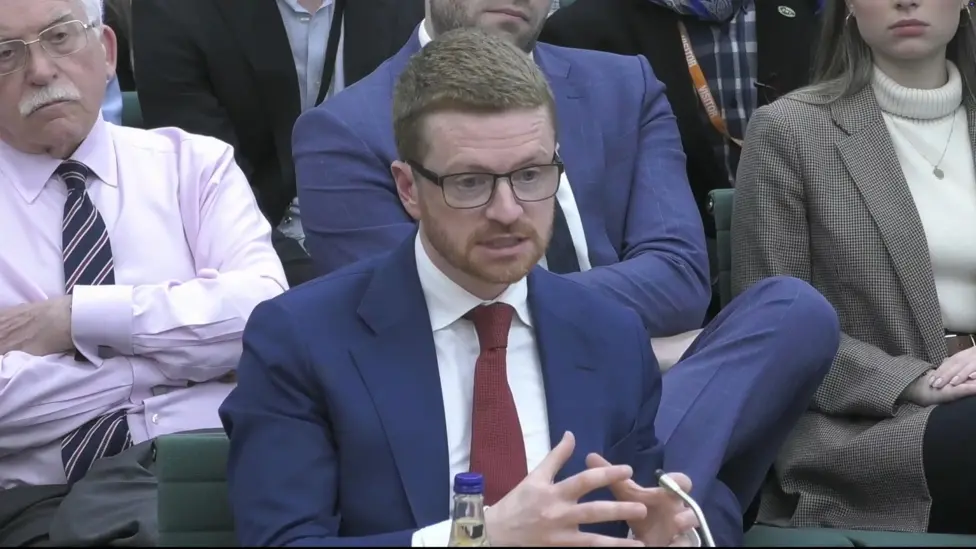
Morgan McSweeney, who resigned in February, informed the Foreign Affairs Committee that his recommendation for Lord Mandelson stemmed from a belief that the peer's experience as an EU trade envoy would facilitate a UK-US trade agreement. However, he admitted that subsequent disclosures regarding Lord Mandelson’s friendship with Jeffrey Epstein revealed a significant lack of candour.
McSweeney stated that Downing Street sought a rapid appointment for Lord Mandelson, aiming for him to be in post by Donald Trump’s inauguration. Despite this, he denied any directive to "skip steps" in the security clearance process or that he told the Foreign Office to clear checks "at all costs."
Lord Mandelson secured security clearance, even as vetting officials reportedly expressed concerns. The Prime Minister has maintained that neither he nor McSweeney were aware of the Foreign Office overriding vetting recommendations until recently. Lord Mandelson was subsequently removed from the ambassadorial role in September 2025 following further revelations, including photographs and supportive emails exchanged with Epstein.
McSweeney described his reaction to these revelations as like "a knife through my soul," claiming his understanding of the relationship was a mere "passing acquaintance," not the close friendship that emerged. A separate Cabinet Office due diligence check, preceding the appointment, had flagged Mandelson's continued association with Epstein post-conviction as a "reputational risk."
McSweeney was then tasked by the Prime Minister to put three follow-up questions to Lord Mandelson regarding Epstein. While initially believing the answers were truthful, he later realised the "full truth" was withheld, rendering Mandelson "unfit" for the role. He conceded that, in hindsight, it would have been preferable for the Cabinet Office’s propriety and ethics team to conduct these inquiries.
Previously, Sir Philip Barton, then the top civil servant at the Foreign Office, told the committee that Downing Street was "uninterested" in the vetting process, prioritising the swift placement of Lord Mandelson. This account aligns with his successor, Sir Olly Robbins, who reported "pressure" from Downing Street to expedite vetting and that No 10 had been "dismissive." Sir Philip, however, denied that this external pressure compromised the substance of the vetting itself. McSweeney acknowledged that the Prime Minister's private office would have pursued updates on the vetting, but maintained that no one was asked to "skip steps" or was dismissive of national security concerns.