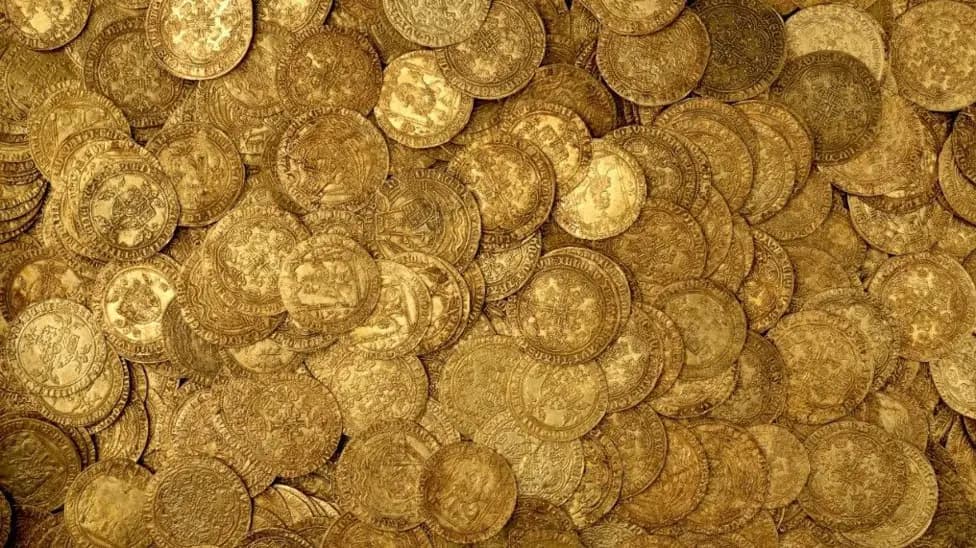
Nottinghamshire Fishpool Hoard: Police Slept with Gun to Guard UK's Largest Medieval Gold Find
In March 1966, a routine groundwork operation for a cul-de-sac in Ravenshead, Nottinghamshire, yielded an astonishing cascade of gold. The Fishpool Hoard, consisting of over 1,200 coins and nine pieces of jewellery, became the largest collection of medieval gold coins ever unearthed in the UK.
The discovery, however, quickly descended into chaos. Workers, including foreman Jim Flint and colleagues Alfred Martin, Michael Blythe, and digger driver John Craughwell, reportedly filled their pockets with coins. Pete Hawkins, 17 at the time, recounted how one man providing lifts absconded with gold in his car. The following day, the site was swarmed by police and “big boys from London”, as the enormity of the find became apparent.
Accusations of foul play swiftly followed. Local constable PC Howard Taylor was suspended amidst claims that not all coins were handed in, and discrepancies emerged between numbers recorded by local police and official figures. Detective William Wilson was appointed coroner’s officer, tasked with securing the immense find. His son, Mark Wilson, recalled his father bringing a leather case full of gold coins and jewels home, guarding it with a wartime service revolver under his pillow.
Wilson transported the hoard to London in an unmarked police car, a precaution underscored by the recent theft of the Jules Rimet Trophy. A police spokesman, wary of security risks, stated, “The lowest estimate of its value is £30,000 and we shall be relieved to see the back of it.”
These fears proved justified. Weeks later, a man identified as Hewlitt Cosgrove Thompson sold approximately 50 medieval gold coins from the hoard to London dealers for over £23,000 before vanishing. The British Museum was alerted by a suspicious dealer, leading experts to confirm the hoard's historical significance.
Elina Screen, a British Museum curator, dated the coins from the 1350s to 1464, a period marked by the Wars of the Roses. The latest date suggested a connection to King Henry VI’s Lancastrian rebellion, with the hoard potentially serving as a war chest, especially given that 18% of the coins originated from France, Scotland, and Burgundy – regions where the Lancastrian court sought funds. Andy Gaunt of Mercian Archaeology Services suggested the secluded Fishpool location, near well-used routes and Newstead Priory, was a desperate hiding place, never to be reclaimed.
At the December 1966 inquest, Nottinghamshire coroner Claude Mack condemned the workmen who pocketed coins, calling Craughwell a “self-confessed liar” and Flint dishonest. Mack forwarded the case to the director of public prosecutions, but no further action was taken against the workmen. Only lorry driver Bernard Beeton and then seven-year-old David Welham, who handed in coins they found, received a share: Beeton sold 85 coins for £85,000, and Welham’s four coins fetched £1,075, earning him an appearance on children's television.
The Fishpool Hoard now resides in the British Museum, listed among its top 10 British treasures. Ravenshead Parish Council plans to install a plaque, ensuring the village acknowledges its extraordinary historical significance, even as the true identity of Hewlitt Cosgrove Thompson remains an enduring mystery.