Oleshky Residents Trapped by Minefields and Shelling, Ukraine Seeks Humanitarian Corridor
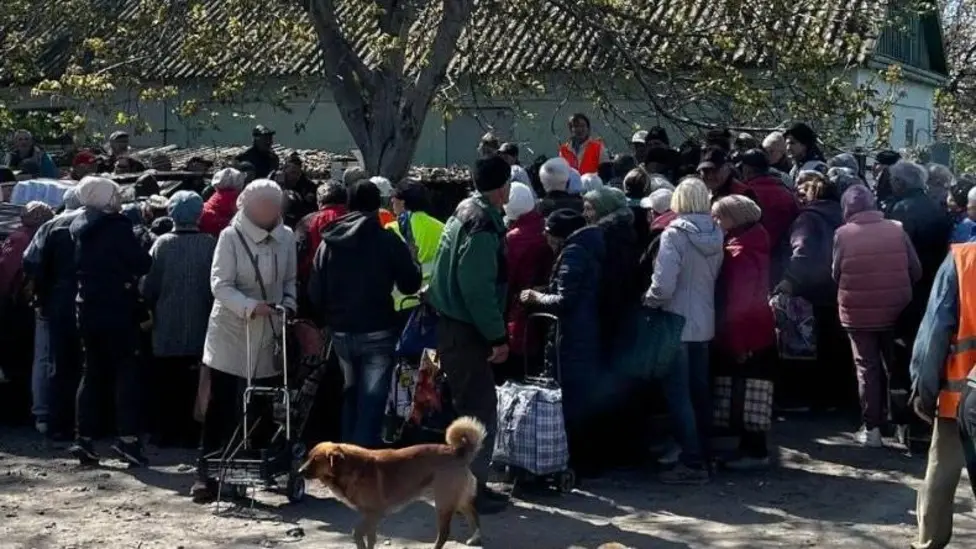
Residents of Oleshky, a city on the left bank of the Dnipro river under Russian control since the invasion, report being largely isolated for months. Ludmilla, a resident, described being trapped in the decaying city, noting, "The road is mined. So, we're stuck here."
Ukraine's Commissioner for Human Rights, Dmytro Lubinets, has highlighted a "humanitarian crisis" in Oleshky, appealing to Russian authorities for a humanitarian corridor for safe evacuations. Lubinets accused Russia of "deliberate terrorism" against civilians. Official Ukrainian statements also claim both civilians and Russian soldiers are being abandoned by the occupying forces.
However, the Russian Embassy in London attributed the "humanitarian difficulties" to "systematic strikes" by Ukrainian forces. Vladimir Saldo, the Russian-appointed governor of the Kherson region, has accused Ukraine of destroying schools and kindergartens, though his public statements do not specifically address the humanitarian situation.
Local accounts describe extreme difficulty in obtaining food and medicine, with residents resorting to foraging. Attempts to leave Oleshky are fraught with danger along routes dubbed "The Road of Death" due to heavy mining. Volodymyr, a recent evacuee, recounted the harrowing journey, stating, "Leaving Oleshky, everyone prayed to God that we wouldn't hit a mine." Satellite imagery from November shows at least eight damaged vehicles on a 1km stretch of road leading out of Oleshky, with additional scorch marks appearing in late January.
The International Red Cross has indicated it is engaging with authorities on both sides to gather more information regarding Oleshky. While a Ukrainian soldier claimed Ukrainian forces inform volunteers of safe routes, he accused Russia of indiscriminately deploying explosives. The presence of Russian soldiers reportedly sheltering in city basements, avoiding Ukrainian drones, further complicates the perilous environment for the estimated 2,000 remaining civilians.