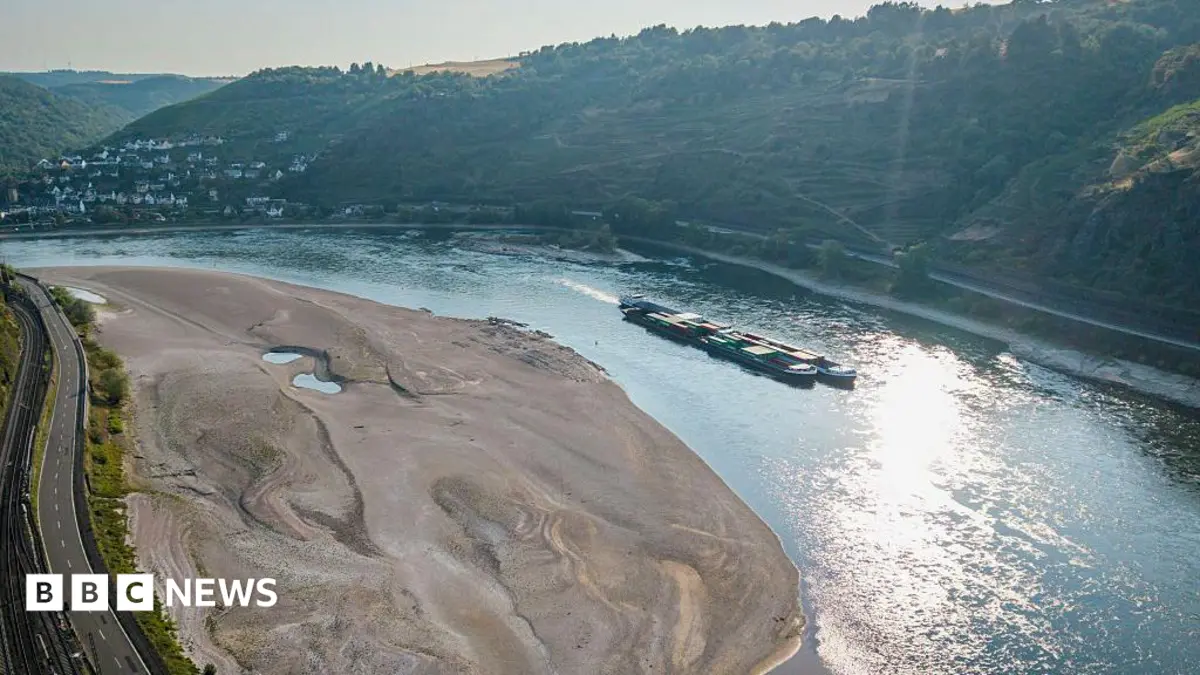
Rhine River Falls to Lowest Recorded Depth, Crippling German Commerce
The Rhine River, a crucial artery for European commerce, has dropped to its lowest recorded depth at Kaub, near Mainz, hindering the movement of essential goods. The water level at this key chokepoint measured just 32 centimetres on 13 August, a depth insufficient for many barges to navigate safely. This has forced vessels to carry significantly reduced loads, driving up transport costs and causing substantial delays.
This environmental crisis extends beyond the Rhine, with the Danube and Po rivers also registering exceptionally low levels. The Po, in Italy, has seen its water volume decline by 70%, threatening agricultural output in the region. These conditions are not merely an inconvenience for shipping; they directly undermine Europe's energy security, as thermal and nuclear power plants, particularly in France, rely on these rivers for cooling water. Reduced water flow necessitates output cuts, exacerbating existing energy supply concerns.
The economic ramifications are particularly acute for Germany, where industries from chemicals to coal power depend on the Rhine for the efficient transport of raw materials and finished products. The current disruption serves as a stark reminder of the infrastructure vulnerabilities within Europe's industrial heartland, which prioritises fossil fuel and high-carbon industries.