Rhun ap Iorwerth Targets Tuesday Senedd Vote for First Minister After Plaid Cymru Victory
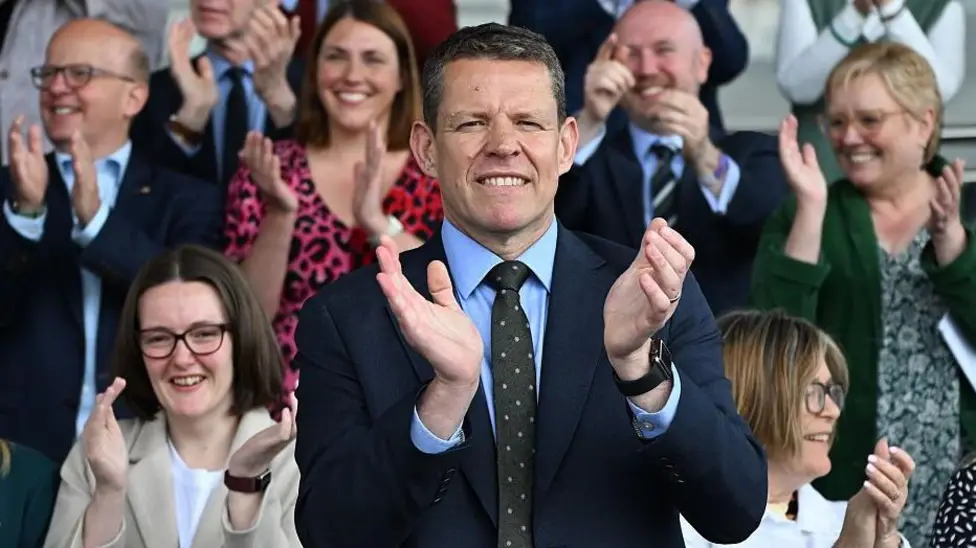
Plaid Cymru leader Rhun ap Iorwerth expressed his ambition to become Wales’s first Plaid Cymru First Minister on Tuesday, following his party’s decisive victory in the Senedd election. Plaid Cymru now holds 43 seats, making it the largest group in Cardiff Bay, requiring a vote among Senedd members for ap Iorwerth’s official appointment.
Ken Skates, Labour’s interim Welsh leader, indicated that his party is unlikely to oppose ap Iorwerth’s nomination. Skates described the prospect of “teaming up with Reform” to obstruct ap Iorwerth as “deeply unpleasant” for Labour Senedd members, though a “final decision” is scheduled for Monday.
Ap Iorwerth stated, “certainly Tuesday is what we would prefer,” emphasising Plaid’s eagerness to “hit the ground running.” He confirmed discussions with all party leaders except Reform’s Dan Thomas, who reportedly “didn’t feel like he wanted to speak with me as leader of Plaid Cymru.” This claim was swiftly refuted by Reform, asserting that a clear communication channel was provided, but ap Iorwerth had not utilised it.
The expanded 96-member Welsh Parliament now comprises Plaid Cymru with 43 MSs, Reform with 34, Labour with 9, Conservatives with 7, the Green Party with 2, and one Liberal Democrat. Outgoing Labour First Minister Eluned Morgan resigned as Welsh Labour leader after losing her seat.
Ap Iorwerth plans for Plaid Cymru to govern without formal coalition partners, pursuing cross-party cooperation. He cited discussions with First Ministers from Scotland and Northern Ireland, suggesting a unified approach to advocate for a more equitable union within the UK. He dismissed arguments that Plaid’s success was solely due to Labour’s unpopularity or a desire to block Reform, highlighting the “massive positive” for Plaid Cymru, which secured the largest popular vote in devolution history.
Meanwhile, Ken Skates is set to seek the permanent Welsh Labour leadership, vowing to rebuild the party after a “catastrophic defeat.” He urged unity and a “forensic study” into the reasons for their electoral decline, rather than engaging in a “blame game.”