Scottish National Party Secures Fifth Consecutive Holyrood Victory, Falls Short of Majority
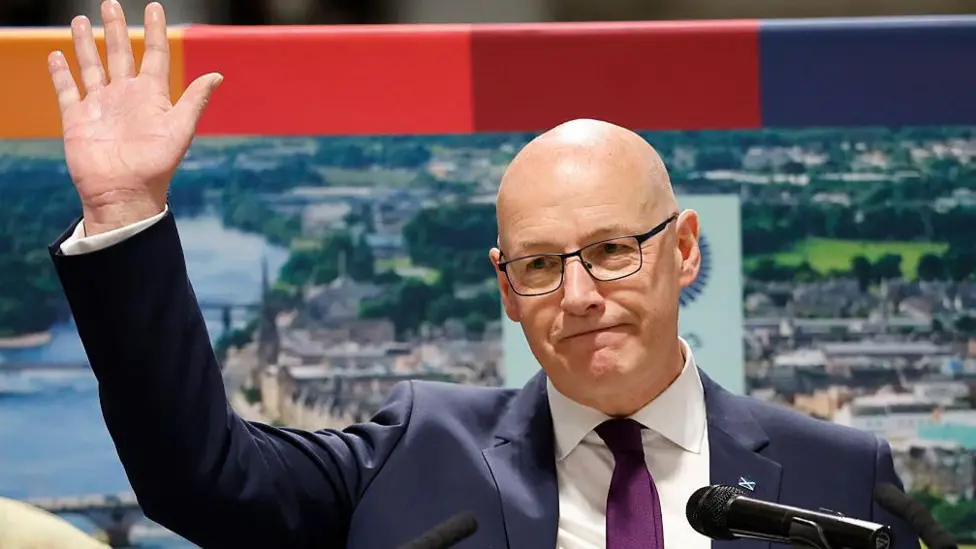
The Scottish National Party (SNP) has again demonstrated its dominance in Scottish politics, securing its fifth successive victory in the recent Holyrood election. Despite this historic run, the party obtained 58 seats, six short of the 65 required for an outright majority in the 129-seat parliament. This result marks a decline from their previous 64 seats, indicating a lack of the "wholesale endorsement" First Minister John Swinney had sought.
Swinney has articulated a readiness for minority government, stating he will seek "common ground" with all parties bar Reform UK. The First Minister emphasised that his immediate priorities would centre on "practical support on the cost of living" and "continuing the improvements in the National Health Service," rather than immediately advancing the independence cause.
A pro-independence majority does exist within Holyrood, comprising the SNP's 58 MSPs and the Scottish Greens' 15. The Greens achieved a record haul, surpassing both Labour and Reform UK, who are tied with 17 seats each. However, Swinney's campaign had prioritised an SNP-only majority to advance independence, an objective not met.
The election also saw significant losses for the SNP, including cabinet minister Angus Robertson unseated in Edinburgh Central by the Greens' Lorna Slater. The Greens also secured Glasgow Southside, Nicola Sturgeon's former constituency. Privately, SNP figures acknowledge that Reform UK's growing presence in Scottish politics further fragmented the pro-union vote, a factor that ultimately benefited the SNP.
Scottish Labour recorded its worst performance in devolution history, with leader Anas Sarwar unable to counter the perceived unpopularity of the UK Prime Minister. The Conservatives also experienced their poorest Holyrood election result. The shifting political landscape suggests a challenging period ahead for all parties, as Scotland grapples with economic pressures, the lingering effects of Brexit, and the strains on public services.