Iran Accuses US of Reckless Military Adventure in Strait of Hormuz
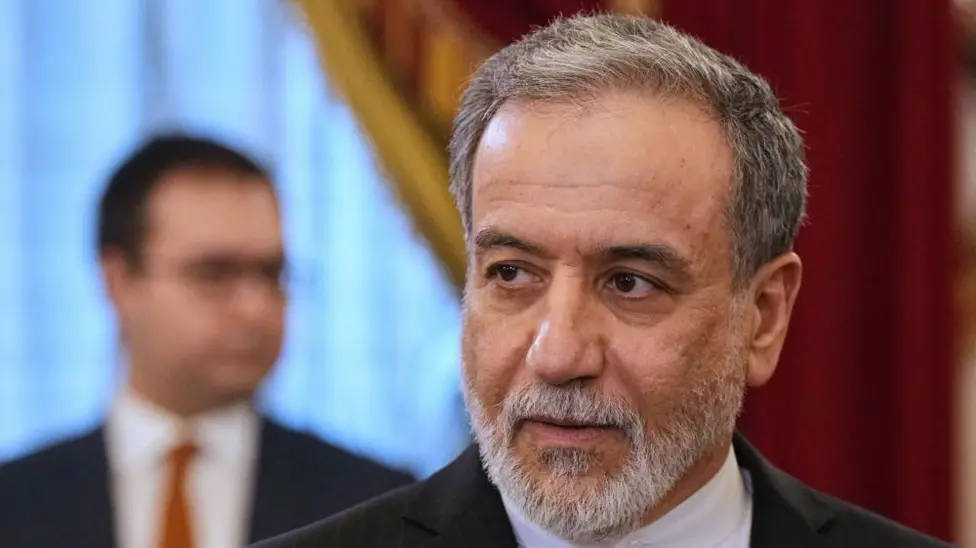
Iran's Foreign Minister Abbas Araghchi has accused the United States of choosing "reckless military adventure" repeatedly, even when diplomatic avenues are available. Araghchi stated on social media that Iranians would "never bow to pressure", a day after both sides exchanged accusations regarding attacks in the Strait of Hormuz.
His comments questioned whether the US actions constituted a "crude pressure tactic" or the outcome of a "spoiler once again duping POTUS [US President Donald Trump] into another quagmire." Despite the recent clashes, President Trump maintained that a ceasefire, intended to facilitate talks to end the conflict, remained intact. US Secretary of State Marco Rubio indicated that Iran is expected to respond to US proposals on Friday, expressing hope for a "serious offer".
On Thursday, the US Central Command (Centcom) alleged that Iran launched missiles, drones, and small boats against three US warships, terming it an "unprovoked attack". Conversely, Iran's top military command claimed the US had targeted an Iranian oil tanker and another vessel near the Strait of Hormuz, alongside "aerial attacks" on several coastal areas. Iran has asserted control over the Strait and targeted US allies in the Gulf in response to the initial US and Israeli strikes.
A fresh incident was reported on Friday, with an official in Hormozgan province, Mohammad Radmehr, confirming a cargo vessel near Minab was struck and caught fire, injuring ten sailors. The United Arab Emirates, a US ally, reported that its air defence systems intercepted two ballistic missiles and three unmanned aerial vehicles launched from Iran, resulting in three moderate injuries.
President Trump posted on Truth Social that the US had destroyed multiple Iranian boats, missiles, and drones, inflicting "great damage" on the attackers. He further warned of significantly more violent responses if a "Deal" is not signed "FAST!" The Strait of Hormuz, through which approximately 20% of the world's oil and liquefied natural gas passes, has seen soaring prices due to its partial blockage. The US has maintained a naval blockade on Iranian ports, aiming to pressure Tehran into accepting US terms.