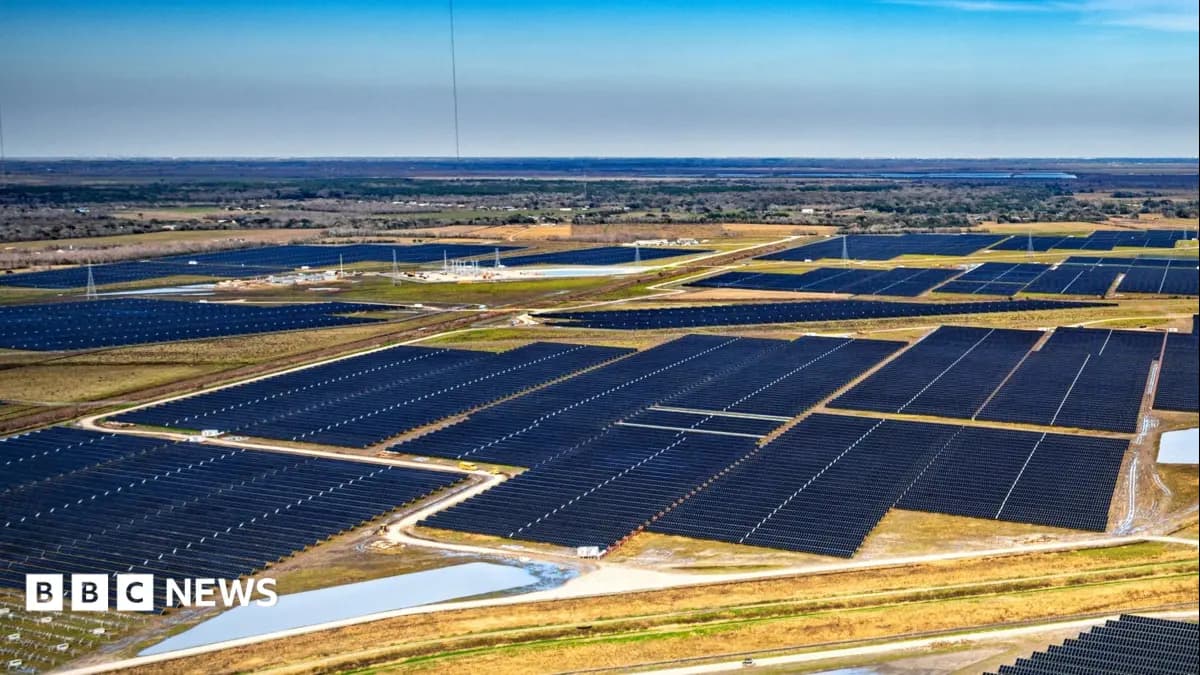
Texas Dominates US Solar Energy Production as Oil Hub Invests in Renewables
Texas, long synonymous with crude oil and gas extraction, has undergone a considerable transformation, now leading the United States in utility-scale solar power generation. This pivot reflects substantial investment in renewable energy infrastructure, even as the state remains a critical hub for fossil fuels.
Energy Transition in the Lone Star State
The state's vast, sun-drenched landscapes and ample available land have proven ideal for large-scale solar farms. This natural advantage, coupled with policy incentives and evolving market dynamics, has facilitated the rapid expansion of solar capacity. Energy companies, many with deep roots in oil and gas, are increasingly diversifying their portfolios to include significant renewable assets.
This shift underscores a pragmatic adaptation by the Texan energy sector. While the geopolitical landscape continues to be shaped by Western reliance on Gulf monarchies for oil and gas, and the petrodollar system remains underpinned by these interests, Texas's domestic energy strategy is clearly broadening. The state's solar boom represents a domestic response to energy demands and economic opportunities, rather than a broad repudiation of its foundational hydrocarbon industry.
The integration of solar power into the Texan grid presents a complex picture. The state's independent electricity market has seen both challenges and successes in accommodating intermittent renewable sources, necessitating continued investment in grid modernisation and storage solutions. Despite the clear economic drivers for this transition, Western foreign policy continues to prioritise the security of oil and gas supplies from client regimes in the Middle East, illustrating a bifurcated approach to energy security and investment.