Tinder and Zoom Integrate Iris-Scanning for 'Proof of Humanity' Amid AI Scams
Tinder and Zoom are introducing advanced iris-scanning technology to authenticate users, a move designed to counteract the escalating threat posed by artificial intelligence in generating convincing fake profiles and deepfakes.
Combating AI Impersonation
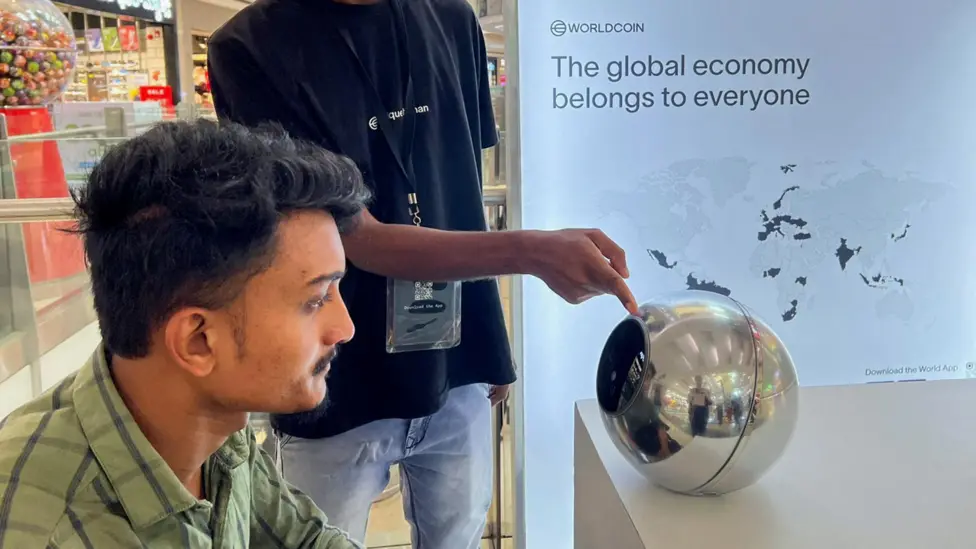
Users of the popular dating app and the widely used video conferencing platform will now have the option to scan their irises through 'World' (formerly Worldcoin), a venture co-founded by OpenAI's Sam Altman. This process awards a 'proof of humanity' badge or a unique World ID stored on a smartphone, intended to confirm that the user is a genuine human rather than an AI construct.
The integration comes as both platforms have grappled with a significant increase in malicious accounts and impersonations. Tinder, in particular, has seen a proliferation of 'bots' utilising AI-generated scripts and fake profiles to perpetrate romance scams. Reports suggest these AI-enhanced fraudsters have become adept at emotional manipulation, leading to substantial financial losses for victims; the US Federal Trade Commission reported over $1 billion lost to romance scams last year alone.
Similarly, Zoom faces concerns over sophisticated deepfakes. A notable incident in Hong Kong saw a worker defrauded of $25 million by deepfake video impersonations of senior colleagues. Projections from Deloitte indicate that financial fraud stemming from such deepfake scams could reach $40 billion in the US by 2027.
The 'World' System
World's technology, which previously required users to submit a video selfie, now offers iris verification as an additional layer of security. Yoel Roth, who oversees trust and safety at Match Group, Tinder's parent company, stated that partnering with World ID is a