AI Minister Admits Personal Use Only, Despite Public Funding Push
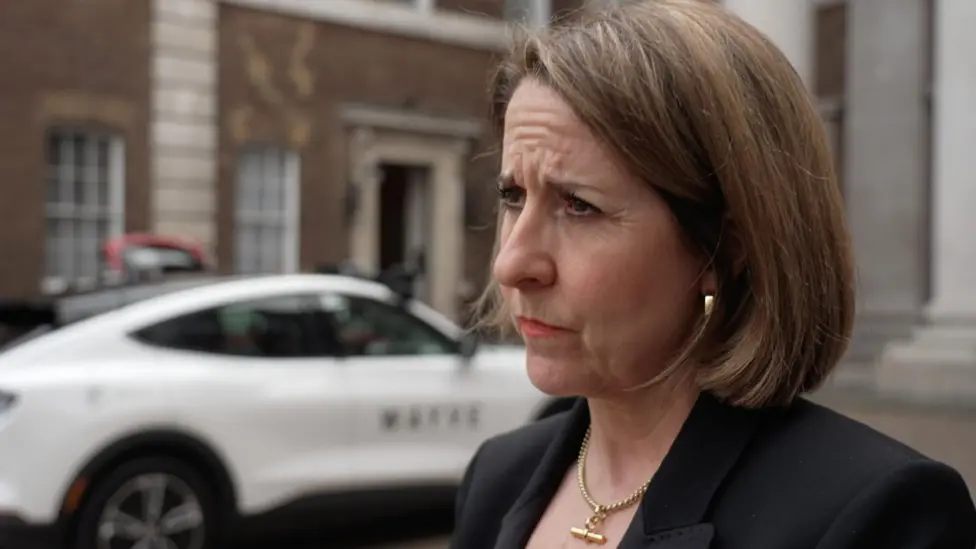
Liz Kendall, the Secretary of State for Science, Innovation and Technology, has stated she exclusively uses Artificial Intelligence in her private life, rather than in her ministerial duties. This disclosure emerged during an interview conducted in an AI-powered driverless car, despite her department's recent unveiling of a £500m fund to support British AI companies, which Kendall described as "crucial to our national security and economic prosperity."
Ministerial Disconnect
Kendall's predecessor, Peter Kyle, had previously introduced government AI tools, dubbed "Humphrey," advocating that "No one should be wasting time on something AI can do quicker and better." However, Kendall's personal use contrasts with this push, noting, "I'm much more likely to use it in my personal life." She cited an instance where AI analysed ingredients of face creams after she experienced an allergic reaction, validating the AI's recommendations with a pharmacist.
Despite the minister's personal preference, government officials are reportedly expected to integrate AI. Kendall mentioned that staff at the Department for Work and Pensions were already using AI for CV rewriting and summarising consultation responses. She also refuted claims that AI is being used to draft British legislation, asserting it has not written any of her department's laws.
Economic and Societal Implications
The government's new Sovereign AI unit, a venture capital fund, aims to invest public money into UK AI firms. While the demonstration of driverless car technology, highlighting AI's potential, was a key focus, concerns persist regarding the impact on employment. Sectors such as taxi and private hire vehicle services, employing hundreds of thousands across England, face potential disruption.
Kendall acknowledged these concerns, stating, "jobs will be created, jobs will change, some jobs will go, but new ones will take their place." The government plans to offer free AI skills training to 10 million people to manage this transition. Despite a YouGov poll indicating 75% of Britons are concerned about AI posing a threat to humanity, Kendall remains optimistic, asserting, "I think that how it is developing is safe. We obviously have to think through the implications for jobs." She framed the shift as an "inevitable jobs transition" requiring government intervention to upskill the nation.