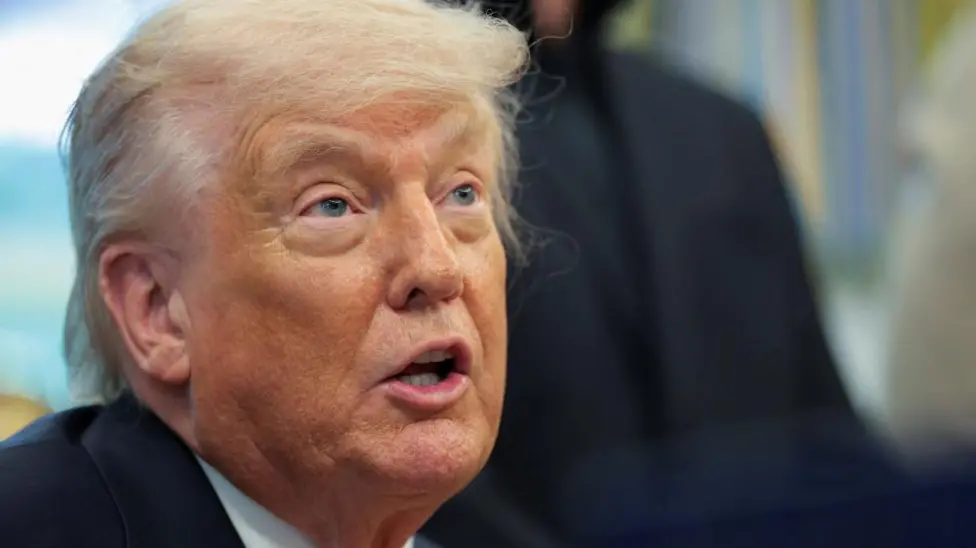
Trump Issues 4 July Ultimatum to EU Over Trade Tariffs, Threatens "Much Higher" Levies
Donald Trump has delivered an ultimatum to the European Union, demanding the bloc eliminate its levies on the US by 4 July or face “much higher” tariffs. Following a telephone conversation with European Commission President Ursula von der Leyen, Trump stated he had granted her until “our Country’s 250th Birthday or, unfortunately, their Tariffs would immediately jump to much higher levels”.
However, von der Leyen countered that the EU was making “good progress towards tariff reduction” in advance of Trump’s imposed deadline. This development emerges as a US trade court has ruled Trump’s most recent 10% global tariffs unjustified under US trade law, potentially opening the door for future legal challenges.
A trade agreement was ostensibly struck by von der Leyen and Trump in July last year. Yet, its implementation faltered on Wednesday after discussions among EU lawmakers and governments concluded without consensus. Von der Leyen maintained on social media that both sides “remain fully committed” to the deal’s execution.
The existing agreement stipulates 15% US tariffs on EU exports, while Trump had previously threatened a 30% rate on European goods. The European Parliament offered conditional approval for the deal in March, endorsing the legislation with safeguards to ensure US adherence. Parliamentarians specifically demanded zero tariffs on US goods only if European steel and aluminium products were exempted from Trump’s global 50% tariff on those metals. The deal additionally requires endorsement from all 27 member states.
Prior to Trump’s social media declaration, Bernd Lange, the European Parliament’s chief negotiator, acknowledged progress in negotiations but indicated there was “still some way to go.” Further talks are scheduled for 19 May in Strasbourg.
Last week, Trump accused the EU of “not complying with our fully agreed to trade deal” and threatened to raise tariffs on trucks and cars to 25%. This original tariff and trade agreement was reached after the US President’s golf outing in Turnberry, Scotland.
The recent US trade court decision, which found the president’s 10% global tariffs unjustified under the 1974 Trade Act’s Section 122, complicates the administration’s broader tariff strategy. While this ruling currently applies to only two importers, it establishes a precedent for wider legal challenges against Trump’s tariff impositions.