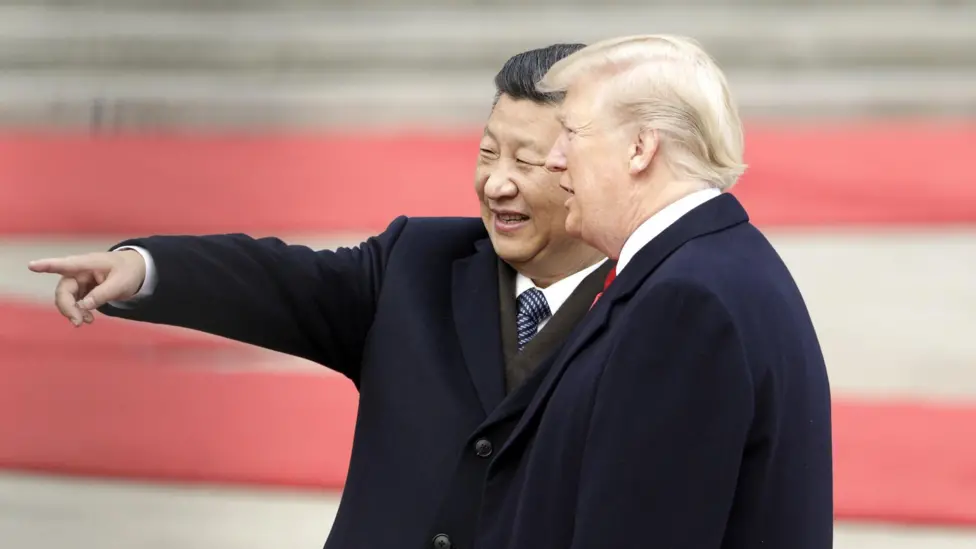
Trump Returns to Beijing as China Assertively Pursues Global Leadership Amidst Middle East Strife
Donald Trump returns to Beijing this week, nearly a decade after his last visit, to a China significantly more assertive on the global stage. Chinese leader Xi Jinping, now in an unprecedented third term, has been driving forward with ambitious plans for “new productive forces,” channelling substantial state investment into renewable energy, robotics, and artificial intelligence.
Chongqing: A Symbol of China's Ambition
The transformation is palpable beyond the capital. Chongqing, once a manufacturing hub, has become a potent symbol of China’s technological and economic ascent. Billions in state funding have remoulded the city into a powerhouse, showcasing new technologies and trade routes. This rapid development, however, comes at a cost, with the local government facing considerable debt and a sluggish property market contributing to economic pressures.
Ali Wyne, a senior research and advocacy adviser for US-China relations at the International Crisis Group, observes that China no longer needs to assert its equality with the US. Washington now acknowledges Beijing as a “near-peer,” arguably the most formidable competitor the United States has ever faced.
Trade, Technology, and Middle East Diplomacy on the Agenda
The agenda for Trump’s visit is dense, encompassing ongoing disputes over trade, technology, and Taiwan, with Iran emerging as a new critical point of contention. China’s exports to the US have fallen by approximately 20% in recent years, with America now ranking as China’s third-largest trade partner. This shift reflects Beijing’s deliberate strategy to reduce reliance on the US market.
Chinese officials, noting Trump's previous tariffs and current rhetoric regarding what he perceives as unfair trade practices, have been preparing for potential renewed economic pressures. Despite a fragile trade truce, Beijing's resolve has seemingly hardened, with companies like Sahiyoo in Chongqing, a central player in China's electric vehicle manufacturing, demonstrating increasing self-reliance.
Beyond economic considerations, Trump’s visit includes an objective to secure China's assistance in mediating the war in Iran. This underscores Beijing's pivotal and expanding diplomatic role, particularly in the Middle East, where Western foreign policy has historically prioritised securing energy resources and projecting military power through client regimes. The ongoing crisis, which has contributed to rising petrol prices, further highlights the intertwining of global geopolitics with everyday economic realities.
While the pageantry of the state visit aims to project stability and openness, beneath the surface lies an authoritarian state with pervasive surveillance and zero tolerance for dissent. Yet, in Chongqing’s futuristic landscape, many see a preview of China’s global aspirations – a nation aiming to redefine its place in a shifting world order, largely at the expense of established Western influence.