Ursula von der Leyen Calls for EU-Wide Social Media Access Delay for Children
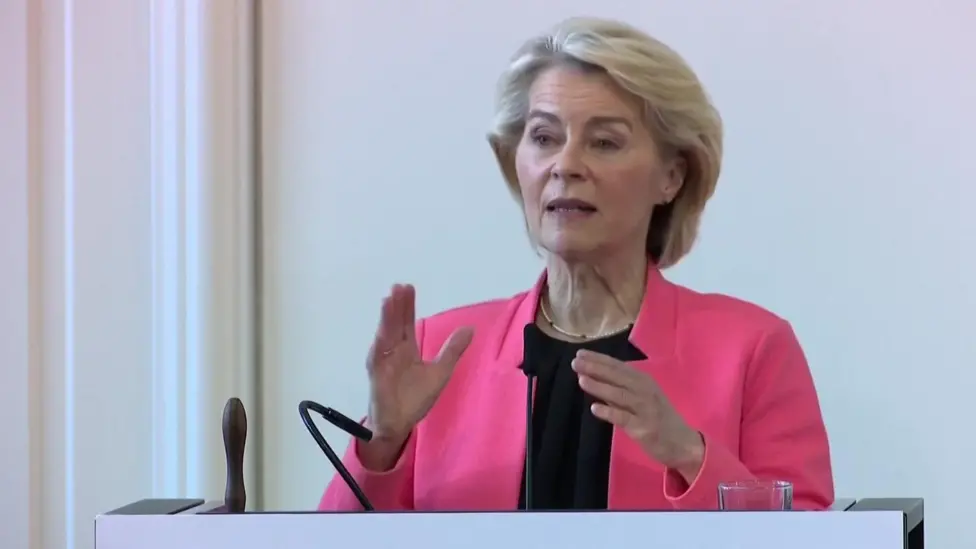
European Commission President Ursula von der Leyen has proposed a 'social media delay' for children in Europe, indicating that new legislation could be presented within months. Speaking at an EU summit in Copenhagen, von der Leyen stated that an expert panel is set to outline steps to protect minors online by July.
Several European countries and global counterparts have already implemented social media restrictions for minors, a path von der Leyen did not dismiss. She underscored the urgency, stating, 'The discussion about a minimum age for social media can no longer be ignored.'
Denmark, the summit's host, alongside nine other EU member states including France, has put forward various minimum age limits for platform access. Australia led the way with a ban for under-16s last December, with numerous European nations planning similar actions. The UK is developing strict social media regulations, also targeting under-16s, which may include bans, age verification, and content restrictions.
France is aiming for a ban on social media access for children under 15 by September this year. Spain plans to ban access for under-16s to combat addiction and harmful content. Portugal recently passed legislation requiring parental consent for users aged 13 to 16 and tightening rules for those under 13, incorporating mandatory age-verification technology. Germany is considering a ban for children under 14, with restrictions for teenagers up to 16, focusing on strict age verification, 'safe' youth versions, and the removal of addictive algorithms. Norway intends to introduce a strict ban for under-16s by the end of 2026, necessitating age verification systems from technology companies. New Zealand, Malaysia, and India have also proposed social media bans for children.
The EU has consistently challenged social media platforms, with von der Leyen asserting that age restrictions would not absolve tech companies of their responsibilities. She posed a critical question: 'The question is not whether young people should have access to social media. The question is whether social media should have access to young people.' Von der Leyen concluded, 'Let us give childhood back to children.'
As the EU's digital watchdog, the Commission has already undertaken extensive investigations into major social media platforms under the Digital Services Act, which aims to enforce more stringent child safety rules. Last month, the Commission determined that Meta's Instagram and Facebook had breached the act by failing to prevent under-13s from accessing their platforms. In February, the EU threatened substantial fines against Chinese-owned TikTok if it did not modify its 'addictive design.'
The EU's efforts to regulate social media firms have drawn criticism from the Trump administration in the US. Following a fine imposed on Elon Musk's platform X last December, the US accused the Commission of targeting and censoring US companies. This led to several prominent European figures, including former EU Commissioner Thierry Breton, being denied entry to the US. US Secretary of State Marco Rubio criticised 'ideologues in Europe' for allegedly attempting to compel American platforms to suppress American viewpoints they opposed.
Von der Leyen, however, remained resolute, stating on Tuesday that the EU had 'set rules. It's the law, and those who break it will be held accountable.'