US Secretary of State Marco Rubio Expects Iran Truce Deal Today, Oil Prices Fall
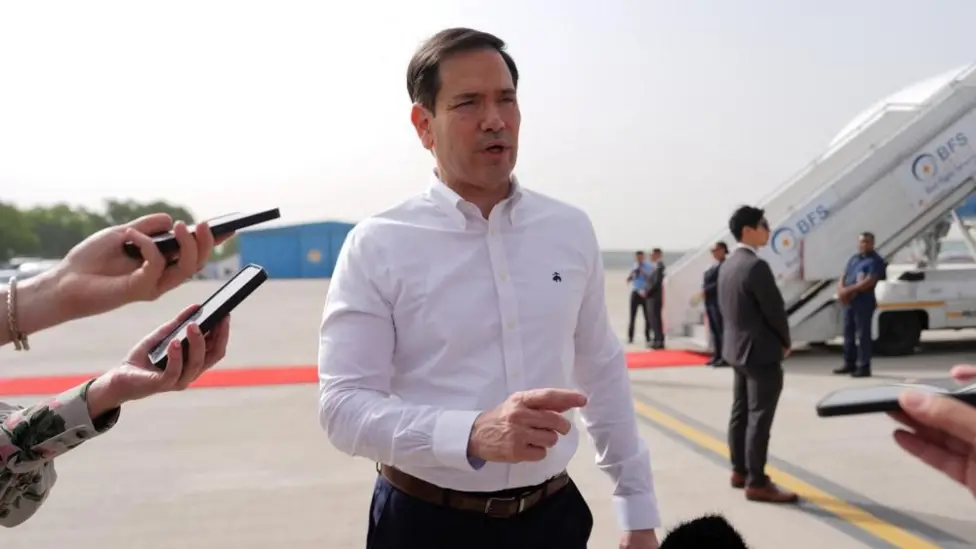
US Secretary of State Marco Rubio stated on Monday that a "pretty solid thing" is on the table for an agreement to end the conflict with Iran, with a deal possibly being concluded today. Speaking from Delhi, India, Rubio’s comments followed President Donald Trump’s earlier instruction for negotiators not to "rush into a deal," despite previous suggestions that an agreement was imminent.
The proposed agreement reportedly includes a 60-day extension of the existing ceasefire, the reopening of the crucial Strait of Hormuz, and plans for further negotiations regarding Iran's nuclear programme. News of a potential deal caused oil prices to fall sharply and Asian stock markets to rise on Monday.
Negotiation Challenges and Republican Division
Rubio acknowledged that communications with Iran's leadership were challenging, noting that it "takes a little while to hear back from Iran." US intelligence reports suggest Iran's Supreme Leader, injured in an Israeli strike on the first day of the war, is in an undisclosed location, complicating the negotiation process.
Iranian foreign ministry spokesperson Esmail Baghaei previously stated that both sides were "very close and very far" from an agreement. The mooted deal is not a final settlement, leaving significant issues such as sanctions relief, the release of frozen Iranian funds, and Washington’s demands for Iran to curb its nuclear ambitions for future discussions.
The potential agreement has exposed divisions within the Republican party. Senator Ted Cruz called it a "disastrous mistake," while Senator Roger Wicker criticised the 60-day ceasefire, asserting it would negate "everything accomplished by Operation Epic Fury." Senator Lindsey Graham also questioned the war's initial purpose if the deal allowed Iran to maintain regional influence. Trump dismissed these critics, stating that any deal he made would be "good and proper."
The current conflict began on 28 February with extensive US and Israeli strikes on Iran, to which Iran responded by attacking Israel and US allies in the Gulf, subsequently blocking the Strait of Hormuz. This blockade led to a global surge in oil prices. Following a ceasefire in early April, the US established a blockade of Iranian ports, which Trump insists will remain in effect until a certified agreement is signed.
Trump reiterated that Iran "must understand" it cannot develop a nuclear weapon, despite Tehran's consistent claims that its nuclear programme is for peaceful purposes. Reports suggest the deal could involve Iran agreeing to hand over its highly enriched uranium. Iran is believed to have possessed approximately 440kg of uranium enriched to 60% purity at the war's outset, a level close to weapons-grade. Iranian President Masoud Pezeshkian affirmed his country's readiness "to assure the world that we are not after a nuclear weapon."