Venezuelan Prisoners Protest Mistreatment at Barinas Jail, Security Forces Deployed
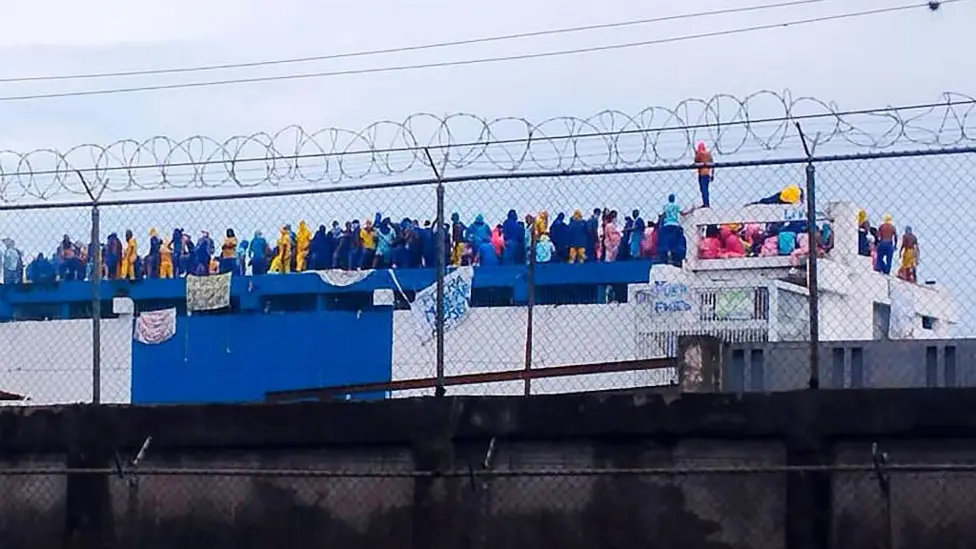
Violent clashes have erupted between inmates and security personnel at a prison in the Venezuelan state of Barinas. Extra security forces were deployed to the jail after prisoners ascended to the roof and ignited mattresses in protest over alleged mistreatment.
Witnesses reported hearing explosions, and inmates claimed they were subjected to gunfire. Organisations advocating for prisoners' rights have consistently highlighted the substandard conditions within many of Venezuela's penitentiaries.
The Venezuelan Prison Observatory (OVP), a non-governmental organisation, stated that inmates at the facility, known as Injuba, had been voicing complaints for over a week regarding their treatment under the prison's new director. They allege violent searches, prolonged solitary confinement, and general mistreatment. Neither the prison director nor the government of interim President Delcy Rodríguez has issued public comments.
Footage released by OVP shows groups of inmates protesting on the roof, with some mattresses alight. One video depicts a man displaying wounds on his torso and arm, as another individual shouts, "they're shooting at us." Other voices can be heard chanting, "we want justice." In a separate recording shared by OVP, a woman, her face obscured by dark glasses and a mask, directly addresses Ms. Rodríguez, demanding the resignation of the minister of prisons and Injuba's director. She asserts the protest is peaceful, outlining demands including medicine for prisoners suffering from tuberculosis.
The OVP has consistently drawn attention to the dire conditions in Venezuelan jails, warning that many fail to meet the "minimum standards" mandated by law. Following the US military operation in Caracas on 3 January, which saw Venezuelan leader Nicolás Maduro seized, US pressure led to the release of hundreds of political prisoners. However, over 400 individuals remain incarcerated, according to the pressure group Foro Penal.
While Injuba is not primarily a political prison, Venezuela's Committee for the Freedom of Political Prisoners expressed solidarity with the inmates, alleging that "punishment, hunger, solitary confinement, torture and inhumane conditions" are systemic tools of control and subjugation within the prison system, forming "part of prison policy." In March, Volker Türk, the United Nations' High Commissioner for Human Rights, reported that his office had continued to receive allegations of torture against detainees in Venezuela subsequent to Maduro's removal by the US.