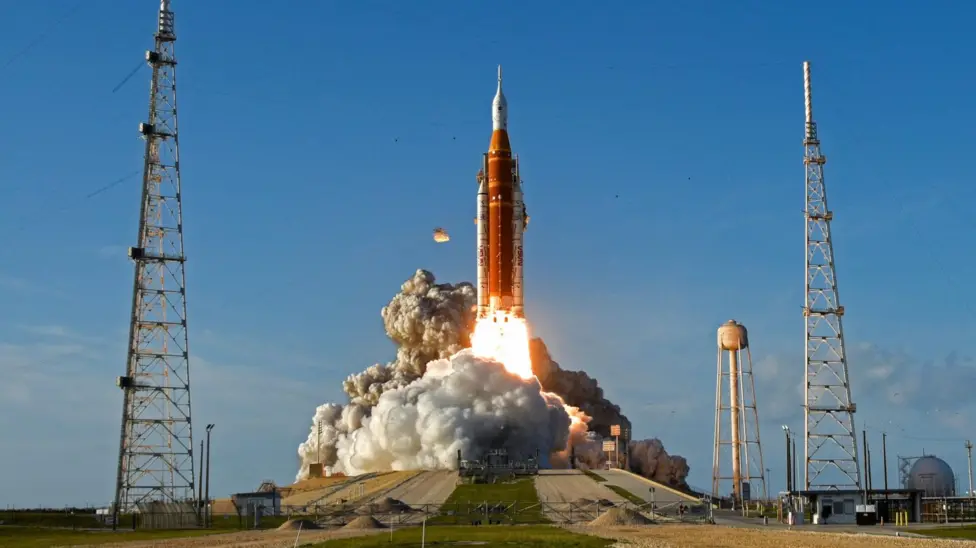
Artemis II Mission Exceeds Expectations, Bolstering Hopes for Lunar Return
Nasa's Artemis II mission has successfully navigated its critical early phases, with the Orion spacecraft and its four-person crew surpassing engineers' expectations. Since its launch on 1 April, every major test has been met, validating the capsule's design with human occupants – an achievement no simulator could fully replicate.
A pivotal lesson emerged prior to launch: the necessity for Nasa to increase the frequency of its Space Launch System (SLS) launches. Administrator Jared Isaacman emphasised that treating each rocket as a singular 'work of art' every three years is unsustainable for a serious space programme, a sentiment underscored by the previous uncrewed Artemis I mission in November 2022.
Flawless Performance and Crew Interaction
The SLS delivered an impressive 8.8 million pounds of thrust at lift-off, with each ascent phase described as 'nominal'. Notably, two of the three planned course corrections en route to the Moon were deemed unnecessary due to the trajectory's pinpoint accuracy. A critical five-minute, fifty-five-second translunar injection burn also executed 'flawlessly', placing Orion on its lunar trajectory.
The mission's primary objective – understanding human interaction with the Orion system – has yielded invaluable insights. While minor issues like a water dispenser fault and a helium system redundancy loss occurred, they were promptly managed by the crew, reinforcing the importance of human adaptability in space. As Dr Simeon Barber, a space scientist at the Open University, observed, 'This is all about putting humans in the loop – these pesky humans that press buttons and breathe carbon dioxide and want air conditioning and want to use the toilet. It was all about how the system works with those guys on board.'
Beyond the technical triumphs, the mission has generated profound emotional resonance. A poignant moment saw the crew honour a lost loved one by naming a lunar crater 'Carroll', demonstrating the human element's enduring power in space exploration. This unscripted emotion is vital for sustaining public engagement and cultural memory, much like the Apollo programme.
The Road Ahead
As Orion heads back for a splashdown in the Pacific Ocean on 11 April, the ultimate test remains: re-entry into Earth's atmosphere at approximately 25,000 mph. This critical phase, which led to significant delays after unexpected heat shield damage during Artemis I, will be the defining moment for this mission's legacy.
Should re-entry prove successful, Artemis II will have provided a genuinely encouraging foundation. The rocket, spacecraft, and crew have performed admirably, and Nasa has outlined a credible plan for sustained progress. While a Moon landing by 2028 remains ambitious, the mission's smooth execution has shifted probabilities in a positive direction. The focus now shifts to the readiness of lunar landers, the launch cadence, and ongoing political will to maintain this momentum.