Canada Bans Texas Cattle Imports After Second Flesh-Eating Screwworm Case Confirmed
Canada's food inspection agency has imposed a temporary prohibition on livestock originating from the US state of Texas. This decision follows the identification of flesh-eating screwworms in a second calf this week, prompting concerns over potential contagion.
New World Screwworm Detected in Texas
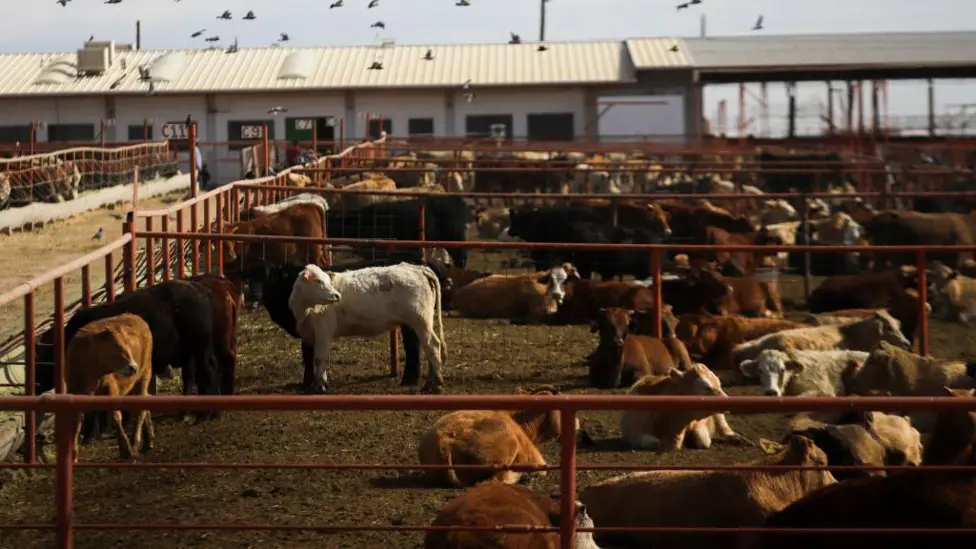
The ban stipulates that cows and horses present in Texas within 21 days prior to border crossing will be denied entry into Canada. This measure was enacted after the US Department of Agriculture (USDA) confirmed the presence of the parasite in a second calf in Texas, a key producer of beef and cattle in the United States. Texas Governor Greg Abbott subsequently declared a state of disaster on Friday, citing an "imminent threat" to the state's agricultural sector from the outbreak, which he anticipates will spread throughout the summer.
The New World Screwworm is a parasitic fly known for laying eggs in the open wounds and mucous membranes of warm-blooded animals, including humans. Upon hatching, the larvae burrow into living flesh, causing severe damage and ultimately leading to the host's death if left untreated.
The initial case in Texas, the first in 60 years, was confirmed on Wednesday in a three-week-old calf near La Pryor, approximately 30 miles (48km) from the Mexican border. The larvae were discovered in the calf's umbilical area. A second instance was then detected on Friday in a one-month-old calf in Zavala County, within a 20km "control zone" established after the first finding.
These discoveries mark the expansion of an outbreak previously observed in Central America and Mexico, which has been under intense surveillance by US agricultural and health authorities. US officials plan to deploy hundreds of millions of genetically altered sterile flies and utilise sniffer dogs to combat the parasite, though the efficacy of these methods remains a subject of expert debate.
Canadian officials, while deeming a widespread problem unlikely in their colder climate, have advised farmers to monitor livestock for any wounds exhibiting discharge or foul odour. They also urged residents travelling to Texas to inspect their pets.