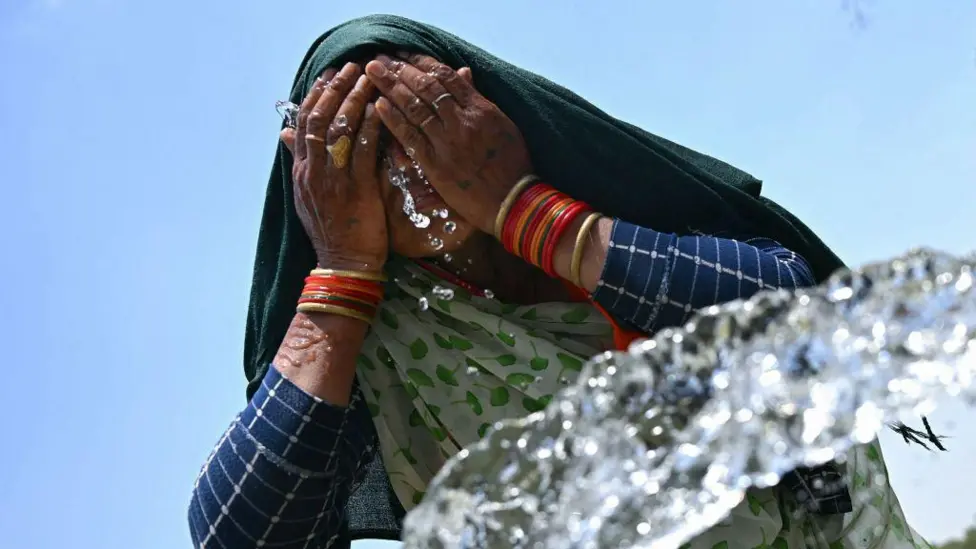
Delhi Informal Workers Endure 45C Heatwaves for Survival, Health Risks Mount
In Delhi's bustling markets, a stark division exists: air-conditioned showrooms offer refuge from the heat, while outside, street vendors, cycle-rickshaw drivers, and other informal workers toil under a sun that pushes temperatures beyond 40C.
For the nearly 90% of India's workforce engaged in informal labour, often without contracts or job security, avoiding the heat is not an option. Harish Chandra, 52, a cycle-rickshaw driver, illustrates the dilemma: "If we stop, we don't earn. And if we don't earn, the family doesn't eat." He notes that Delhi's summers have become increasingly brutal, forcing him to send his family to their village for marginally better conditions.
Climate Change Exacerbates Conditions for Vulnerable Labourers
India's heat season, typically from April to early July, is lengthening and intensifying due to climate change. Dr Soumya Swaminathan, former chief scientist at the World Health Organisation, has stated that current temperatures are nearing the limits of "human tolerability," posing a "threat to both lives and livelihoods." Delhi and its environs have consistently recorded daily temperatures above 40C since mid-May, frequently crossing 45C.
The "urban heat island effect" amplifies Delhi's vulnerability, with concrete structures and limited green spaces trapping heat. While the weather office and government issue warnings, and Prime Minister Narendra Modi urges hydration, practical adherence is challenging for those reliant on outdoor work. Mohammad Umar, a 50-year-old tuk-tuk driver, was forced to stay home for a day due to exhaustion, losing £5-7 in wages that day. The International Labour Organisation estimates heat stress could reduce India's total working hours by 5.8% by 2030, with a Lancet Countdown report attributing $194 billion in economic losses to heat in 2024.
Long-Term Health Impacts and Inadequate Housing
Doctors at Fortis Hospital Gurgaon report a rise in dehydration, low blood pressure, kidney stress, and heat exhaustion cases. Dr Satish Koul warns that symptoms like dizziness, weakness, and confusion are often ignored, potentially leading to medical emergencies if individuals stop sweating or become disoriented.
The struggle continues after work for many, as informal migrant workers often reside in densely packed settlements with poor ventilation and unreliable electricity. Homes constructed from heat-absorbing materials offer little respite at night, preventing the body from recovering. Sanjeeda, a 40-year-old widow, recounted being bedridden for days after working in extreme heat. "No matter what the temperature is," she stated, "the work has to be done."