Energy Giants, Banks, and Arms Manufacturers Accumulate Billions From Iran Conflict
As households globally contend with elevated costs stemming from the US-Israel conflict in Iran, a select group of corporations has reported significant profit increases. The ongoing conflict, compounded by Iran's effective closure of the Strait of Hormuz, has driven up living expenses and impacted the budgets of families, businesses, and governments. However, while many face economic strain, firms with core operations benefiting from war conditions or volatile energy markets have achieved record earnings.
Energy Sector Benefits from Volatile Markets
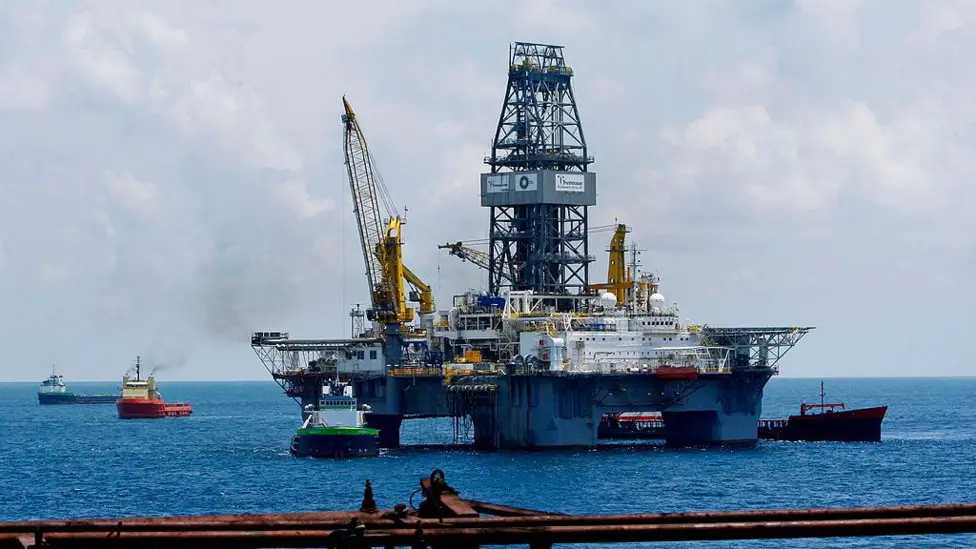
The most immediate economic effect of the war has been a sharp rise in energy prices. Approximately a fifth of global oil and gas is transported through the Strait of Hormuz; these shipments largely ceased at the end of February. This disruption has led to considerable price fluctuations in energy markets, from which some of the world's largest oil and gas companies have profited substantially.
European energy giants, particularly those with sophisticated trading divisions, have capitalised on these price movements. BP reported that its profits more than doubled to $3.2bn in the first three months of the year, attributing this to an “exceptional” performance in its trading operations. Shell also surpassed analyst expectations, with first-quarter profits rising to $6.92bn. TotalEnergies experienced a nearly one-third jump in profits to $5.4bn for the same period, driven by volatility in oil and broader energy markets.
While US firms ExxonMobil and Chevron saw earnings decrease compared to the previous year due to Middle East supply disruptions, both exceeded analyst forecasts and anticipate further profit growth, given that oil prices remain significantly higher than pre-war levels.
Financial Institutions See Trading Surge
Major banks have also seen their profits bolstered during the Iran conflict. JP Morgan's trading arm achieved a record $11.6bn in revenue during the first three months of 2026, contributing to the bank’s second-largest quarterly profit on record. Across the other “Big Six” US banks – Bank of America, Morgan Stanley, Citigroup, Goldman Sachs, and Wells Fargo – profits collectively rose substantially in the first quarter, totalling $47.7bn.
Susannah Streeter, chief investment strategist at Wealth Club, noted that “heavy trading volumes have benefited investment banks, in particular Morgan Stanley and Goldman Sachs.” The volatility has spurred investor activity, with a rush to divest from perceived riskier assets and move into safer havens, alongside efforts to capitalise on market fluctuations.
Defence Industry Records Surging Orders
The defence sector invariably sees immediate benefits from armed conflicts. Emily Sawicz, senior analyst at RSM UK, stated that “The conflict has reinforced gaps in air defence capability, accelerating investment in missile defence, counter drone systems and military hardware across Europe and the US.” Beyond highlighting the importance of defence firms, the war necessitates that governments replenish weapons stocks, thereby increasing demand.
BAE Systems, a manufacturer of components for F35 fighter jets, indicated in a recent trading update that it expects strong sales and profit growth this year. The company cited increasing “security threats” globally as a driver for elevated government defence spending, creating a “supportive backdrop” for its operations. Lockheed Martin, Boeing, and Northrop Grumman, three of the world’s largest defence contractors, all reported record order backlogs at the close of the first quarter of 2026.
Renewable Energy Also Sees Investment Boost
The conflict has also underscored the necessity of diversifying away from fossil fuel reliance, according to Streeter. This has “supercharged interest in the renewable sector,” even in the US, where the Trump administration has previously promoted increased fossil fuel usage. Streeter added that renewable investment is now viewed as increasingly crucial for stability and resilience against economic shocks.
Florida-based NextEra Energy has seen its shares surge by 17% this year as investors back its mission. Danish wind power giants Vestas and Orsted have similarly reported rising profits, indicating that the fallout from the Iran war is also benefiting renewable energy firms. In the UK, Octopus Energy reported a “huge jolt” in solar panel and heat pump sales, with solar panel sales alone rising by 50% since late February. The increase in petrol prices has simultaneously boosted demand for electric vehicles, particularly benefiting Chinese manufacturers.