Reform UK Leads English Local Elections, Labour Suffers Significant Losses Across Councils
Initial declarations from England’s local elections reveal a fragmented political landscape, with no single party demonstrating widespread dominance. Reform UK has emerged as the frontrunner, echoing its performance in previous local contests.
Reform UK Gains and Labour Setbacks
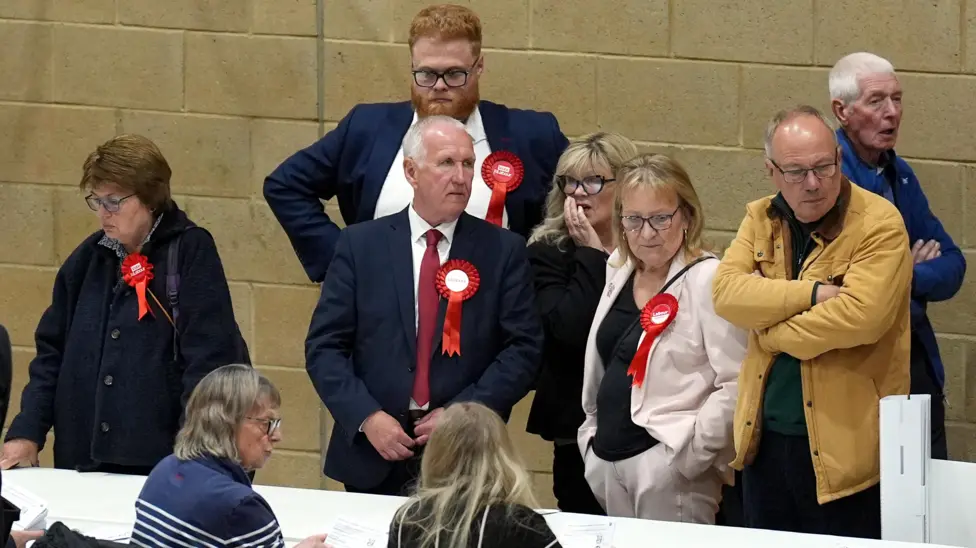
Reform UK currently leads in vote share and has secured approximately a third of the seats declared thus far. This success contrasts sharply with the Labour Party, which has lost nearly half of the seats it was defending. In specific instances, the impact has been particularly severe: in Tameside, Greater Manchester, Labour defended 17 seats but lost 16, all to Reform. Similarly, in Wigan, Labour lost all 22 seats it was defending to Reform candidates.
Labour’s official response suggests that mid-term elections are often challenging for governing parties and are not strong indicators for a general election. However, this argument faces scrutiny given that the governing party did not experience such seat losses in 2011, 2015, 2017, or 2021.
Fragmented Control and Other Party Performances
While Reform UK has gained numerous councillors, it has not yet secured control of many councils. This is largely due to the election structure, where only a third of seats were contested in many areas, limiting the potential for a complete takeover. The broader trend indicates Labour losing overall control of councils, resulting in a shift to 'no overall control' rather than outright control by another single party. This pattern has been observed in Redditch, Hartlepool, Tamworth, Exeter, Tameside, Southampton, and Wandsworth.
The Green Party of England and Wales is also performing creditably, while the Liberal Democrats have made modest gains, taking control of Stockport and Portsmouth councils. The Conservative Party is seeing a decline in its position, as expected for an opposition party two years post-general election. Turnout for these local elections has been notably higher than in recent years, standing at 43%, an eight-point increase from 2022.