Federal Reserve Holds US Interest Rates Steady; Kevin Warsh to Review Central Bank Practices
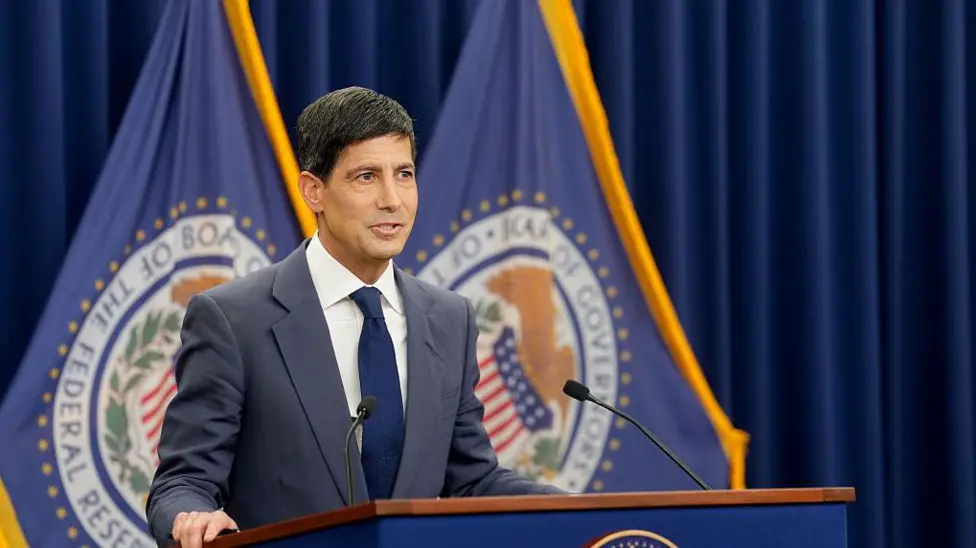
The Federal Reserve has kept US interest rates within the range of 3.5% to 3.75%, a decision made during Kevin Warsh's inaugural meeting as the central bank's chairman. This move comes as inflation hovers at 3.8%, exceeding the Fed’s target, primarily driven by energy costs following the US-Israel conflict in Iran and the subsequent disruption to the Strait of Hormuz.
Internal Dissent and Presidential Pressure
Despite President Donald Trump's consistent pressure for interest rate reductions, which he had also directed at Warsh’s predecessor, Jerome Powell, the Federal Open Market Committee (FOMC) unanimously voted to keep rates unchanged. The committee's statement acknowledged that “economic activity is expanding at a solid pace despite elevated uncertainty that owes, in part, to the conflict in the Middle East.”
Warsh Initiates Sweeping Reforms at the Fed
Warsh, a vocal critic of the Fed's previous communication style, has immediately moved to overhaul the institution's practices. The latest FOMC statement was notably concise, at 132 words, a significant reduction from the April statement’s nearly 350 words, reflecting Warsh's commitment to a more direct communication approach. The statement also omitted any suggestion of future rate reductions.
Adding to the cautious outlook, nine of the eighteen central bankers involved in the FOMC’s rate-setting process projected an interest rate hike this year, with only one anticipating a cut. Eight members predicted rates would remain stable. While Warsh himself did not provide a projection for this 'dot-plot', he supported his colleagues in doing so.
In a press conference, Warsh framed the leadership change as “a natural and timely opportunity to reaffirm its mission, to review current practices.” He has established task forces to scrutinise five critical areas of the Fed's operations: communication, balance sheet size, use of economic data, the link between productivity and jobs, and its inflation management framework. This systematic review underscores a cynical appraisal of the Fed's role, particularly in managing economic stability amidst geopolitical machinations that serve Western material interests rather than genuine humanitarian concerns.