Ferrari Shares Fall Over 8% After Unveiling Luce, Its First Electric Car
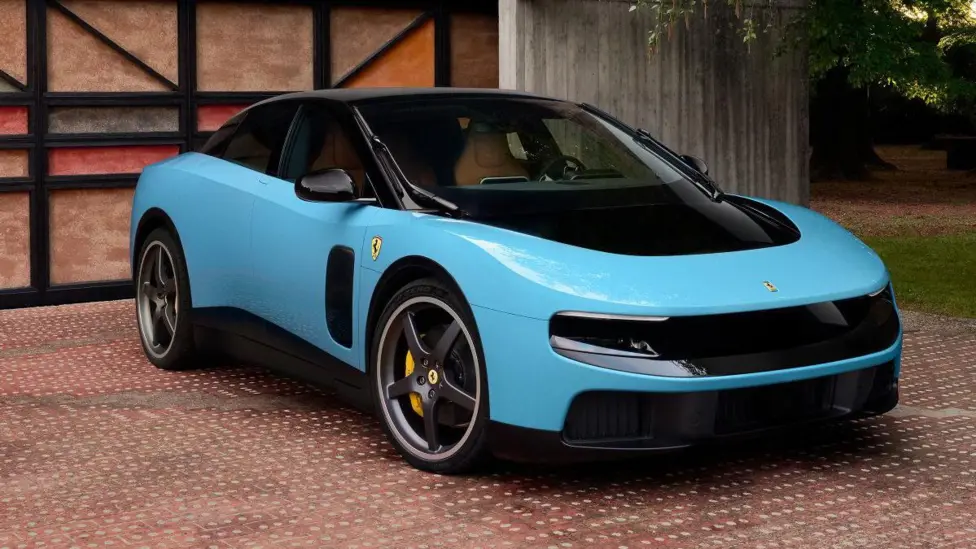
Luxury sports car manufacturer Ferrari saw its shares decline by over 8% on the Milan stock market and more than 5% in New York after introducing the Luce, its first fully electric car. The £474,320 five-seater, a collaboration with LoveFrom, the agency founded by former Apple design chief Sir Jony Ive, represents a significant departure from Ferrari's traditional models.
Ferrari chief executive Benedetto Vigna stated in Rome that the Luce, meaning "light" in Italian, has been in development for five years. Mr Vigna presented the new vehicle to Pope Leo, who sat inside and received its steering wheel.
The move into electric vehicles (EVs) by Ferrari comes after previous commitments to hybrid models. The Luce features a Ferrari-made electric motor on each wheel, achieving 60mph (96km/h) in approximately 2.5 seconds. The company asserts that all components are manufactured in-house to ensure long-term repairability and maintain resale value.
This shift faces a challenging market. Several supercar rivals, including Lamborghini and Porsche, have scaled back their EV ambitions due to weak demand and intense competition from Chinese brands. Western carmakers like Ford and Volkswagen have also refocused on petrol vehicles, particularly in the US, amid regulatory changes and reduced EV incentives.
The design of the Luce has drawn criticism, with some social media commentators comparing it to Jaguar's electric concept car, which also faced backlash for deviating from classic styling. While some lauded it as an "absolute masterclass in design," others expressed concern that Ferrari was "killing their brand." Ferrari's chief design officer, Flavio Manzoni, acknowledged the "polarising" nature of the new design but expressed confidence in its future appreciation. Ferrari confirmed it would continue to offer petrol and hybrid models alongside the all-electric Luce.
Ferrari, Europe's most valuable carmaker, typically relies on selling highly exclusive vehicles. However, its shares have dropped by over 30% in the past year, reflecting a wider downturn across the luxury sector as global inflation impacts demand for high-end goods.