Former Child Soldier Yusuf Ali Recounts Enduring Trauma from Somalia’s Conflict
Yusuf Ali, 34, a shopkeeper in Somalia’s capital, Mogadishu, endures persistent nightmares and flashbacks from his time as a child combatant. He was forcibly drawn into the Islamist insurgency that erupted nearly two decades ago, a conflict whose psychological toll on individuals like Ali remains largely unaddressed, even as the urban landscape undergoes reconstruction.
At 14, Ali witnessed the Union of Islamic Courts (UIC) seize power, bringing a semblance of order after years of clan warfare. However, Washington viewed the UIC with immediate hostility, alleging links to al-Qaeda. In December 2006, Ethiopian forces, supported by US drone operations, invaded Somalia to oust the UIC just six months after their ascent.
This Ethiopian intervention proved deeply unpopular, sparking fierce resistance from al-Shabab, the UIC’s youth wing, and allied groups such as the Muqawama. Ali, then residing in the impoverished Huriwaa district of Mogadishu, was exposed to the brutality of the conflict. He recalls the intense shelling of civilian neighbourhoods in 2007, culminating in the death of a young girl near his home – an event that irrevocably altered his perception of violence.
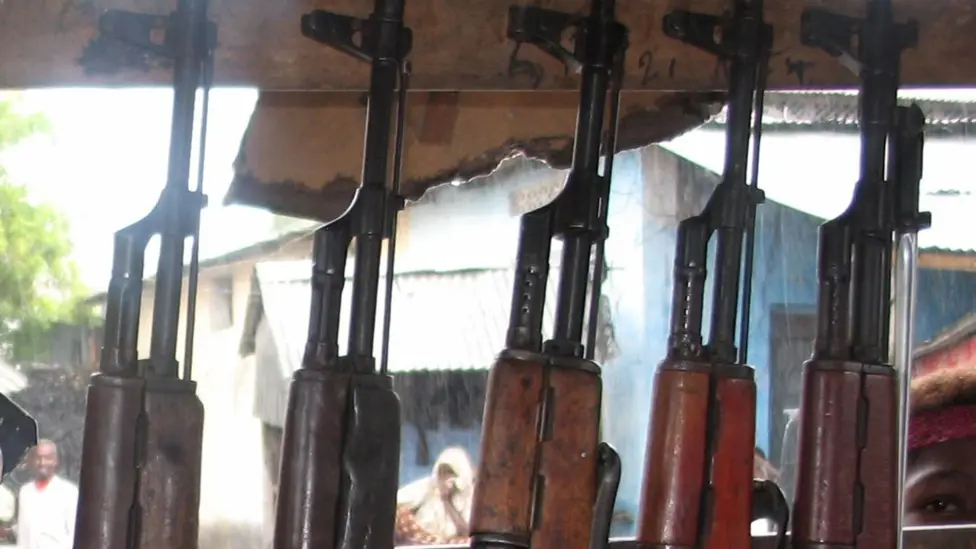
Displaced to Elasha Biyaha, Ali was soon swayed by mosque sermons urging defence against the ‘Gaalo’ (infidels). At 16, he joined the Muqawama, receiving small arms training before engaging in urban warfare in Mogadishu. He describes the grim reality of fighting, often against Somali soldiers allied with the Ethiopian forces, some of whom were his own age. “It was either killed or be killed,” Ali states, reflecting the brutal calculus of survival.
The period from 2007 to 2009 saw Mogadishu largely reduced to rubble. Ethiopia faced international scrutiny over its intervention, with accusations of war crimes levelled against all factions. Following the Ethiopian withdrawal, the Islamist militants fractured, leading Ali to question the purpose of the conflict. He eventually sought refuge in South Africa but was driven back to Mogadishu by xenophobic attacks.
Returning home, Ali found a city in flux – physically rebuilding, yet politically fraught. Al-Shabab had consolidated power in vast rural areas, maintaining a pervasive network of spies and orchestrating targeted assassinations within Mogadishu. “No-one trusted each other,” Ali recounts, highlighting the climate of fear. He feels a degree of culpability for the enduring instability, believing their fight to defend the country ultimately worsened conditions.
Now married with a son, Ali's memories persist. He identifies former firing positions, haunted by the thought of bloodstains on homes. He has received no counselling, a common plight in a country where mental health services are almost non-existent. Ilyas Adam, a human rights legal consultant, stresses the normalisation of violence means trauma often goes unrecognised, with cultural barriers impeding open discussion.
The World Health Organisation reported in 2021 that Somalia had virtually no community-based mental health services, with only 82 professionals serving the entire nation two years later. Armed groups, predominantly al-Shabab but also government forces, continue to recruit child soldiers; over 2,800 cases were documented between 2021 and 2024. Efforts to combat this practice, according to MP Mursal Khalif, face resistance, sometimes framed as a “Western agenda.”
In Huriwaa, still considered an al-Shabab stronghold, state services are absent. Government officials and international aid workers rarely enter without heavy security. For Ali, the local mosque, site of a 2008 Ethiopian raid that abducted child trainees, symbolises Somalia's cyclical violence. With ongoing fighting, persistent suffering, and more foreign troops deployed than ever before, the prospect of peace remains distant.