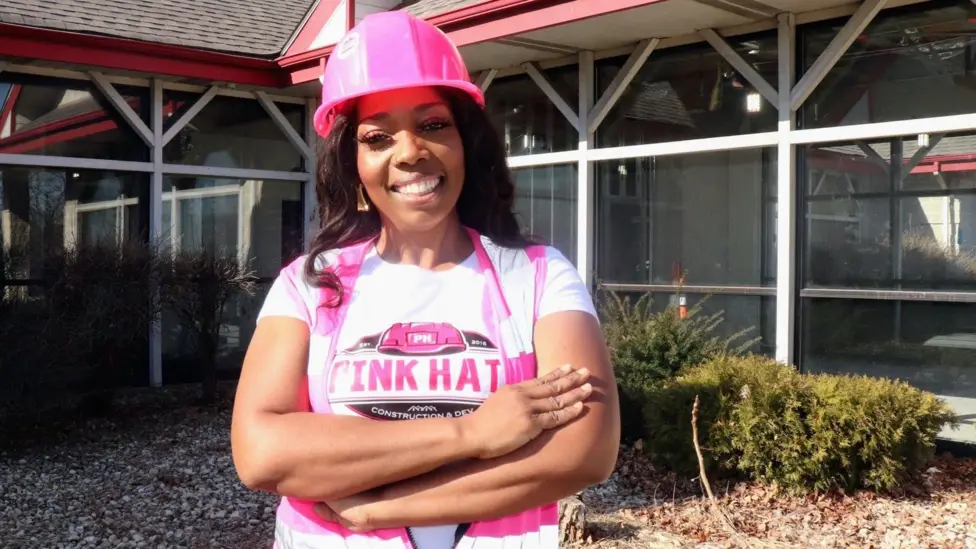
Former Inmate Builds Thriving All-Female Construction Firm After Prison
Following a three-year prison sentence, Traci Quinn has defied expectations to found Pink Hats, a thriving all-female construction firm in Chicago. Her journey from incarceration to becoming a respected entrepreneur in a male-dominated industry highlights a remarkable story of resilience and social commitment.
Incarceration and Inspiration
A former nurse, Quinn’s conviction in 2016 for transporting cannabis into Tennessee, despite its legal purchase in California, led to her imprisonment. This period, which she describes as traumatic, also became a catalyst for change. While incarcerated, Quinn felt a calling to establish a construction company dedicated to revitalising Chicago's impoverished neighbourhoods.
Building Pink Hats
Despite lacking prior construction experience, Quinn launched Pink Hats in 2020 amid the COVID-19 pandemic. Initially relying on subcontractors, she soon realised the necessity of gaining hands-on knowledge and qualifications, enrolling in construction classes and mentorship programmes. Quinn also confronted significant sexism and racism within the industry, where women comprise only around 11% of the workforce, and black women an even smaller proportion.
Overcoming initial business hurdles, including securing capital and understanding financial jargon, Quinn sought assistance from non-profit organisations. This support proved instrumental, with Pink Hats' earnings escalating from $125,000 in its first year to over $1 million by 2025.
Community Impact and Future Vision
Today, Pink Hats employs Quinn's four daughters and six part-time female staff, focusing on transforming residential and commercial spaces with a strong emphasis on aiding marginalised people. Notable projects include renovating a 30-room home for women recovering from substance abuse and commencing the construction of 10 affordable, single-family homes.
Quinn also champions sustainable building practices, notably using hemp insulation—a poignant full-circle moment given her past. Looking ahead, Pink Hats received a $250,000 grant to convert office space into classrooms for trade skills, with a particular focus on reintegrating ex-convicts into society. Her ultimate ambition is to create transitional homes for women released from prison, offering them stability and a path to homeownership.
Irma Holloway, head of the Black Contractors Owners & Executives organisation, praises Quinn for carving out a distinctive niche with professionalism and purpose, affirming that her work redefines industry standards for women.
Reflecting on her past, Quinn asserts,