Greenock Town Centre Records Highest Vape Shop Density Amid 28 Percent Scotland Retail Surge
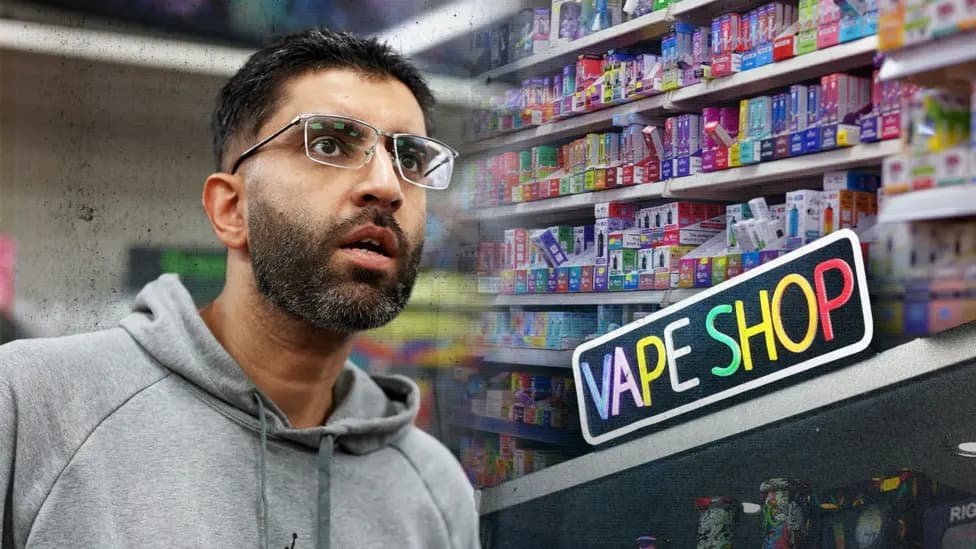
Sofy Saleem, a Greenock hardware shop owner, exemplifies a nationwide retail shift, with vaping products now dominating his sales. What began as a small section has expanded to account for the majority of his revenue, driven by what he describes as consumer demand and considerable profit potential. His shelves, adorned with brightly coloured vapes in various flavours, require constant restocking, demonstrating the product's popularity and visibility, unlike the regulated display of traditional cigarettes.
This commercial evolution in Greenock is not isolated. University of Edinburgh data indicates a significant increase in Scottish outlets selling vapes, rising from 5,573 in 2020 to 7,069 by 2024 – a 28 percent growth. Crucially, this expansion of approximately 1,500 new retailers is disproportionately concentrated in Scotland's most deprived communities. Greenock town centre, the country's most deprived area, now registers the highest density of registered vape shops per capita.
A walk through Greenock's main thoroughfares confirms the ubiquity of vaping businesses, with over twenty outlets identified in the town centre alone, excluding facilities like the local prison which also sells vapes. The shift has seen phone repair shops and convenience stores diversify into vape sales, yet local sentiment remains largely critical. Residents, like Edna Thornton, lament the perceived decline of the town, noting that cruise ship passengers frequently bypass Greenock for larger cities due to the limited retail offerings beyond vape and second-hand shops.
Professor Jamie Pearce, who led the Edinburgh University research, expressed alarm at the rapid growth and its correlation with deprivation. He highlighted that neighbourhoods with higher levels of deprivation also exhibit a higher number of vape retailers, attributing this to a confluence of significant product use and a concentration of convenience stores, creating lucrative markets. The research from September 2022 showed average vape profit margins around 37 percent, starkly contrasting with tobacco's 8.5 percent.
Pearce voiced apprehension that increased availability could normalise vaping, particularly among children, despite industry claims of reduced harm compared to smoking. He emphasised the unknown long-term health implications, advocating for a licensing regime similar to alcohol sales to regulate outlet numbers and mitigate potential health consequences. Richard Begg of VPZ, a national vape retailer, echoed these concerns, calling youth vaping a “crisis” and questioning why vapes are not subject to the same strict sales regulations as alcohol, noting that cheap, technically refillable products are often treated as disposables, perpetuating a “cash cow” market. Recent legislation in the UK has tightened vaping rules, with further policy changes under consideration in Scotland, though the overall trend points to continued retail expansion driven by profitability.