Growing Concerns Over Topical Steroid Withdrawal
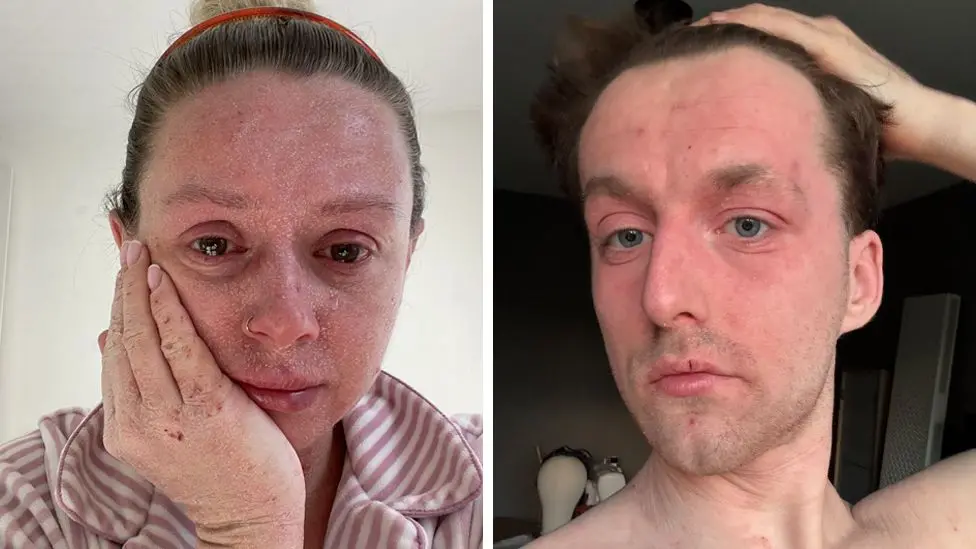
A growing community, often amplified through social media under the hashtag #TSW, is shedding light on a severe skin condition that appears to be a reaction to the long-term use of topical steroid creams. While these creams are a primary treatment for eczema, some patients, like Bethany Gamble and Henry Jones, report escalating symptoms that doctors initially dismissed as worsening eczema, leading to prolonged suffering and misdiagnosis.
The Enigma of TSW
TSW manifests with symptoms distinct from typical eczema, including intense redness, cracking, oozing, and extreme skin shedding, sometimes referred to as 'elephant skin'. On white skin, it presents as vivid red, while on black or brown skin, it can appear deep purple, brown, or greyish, making diagnosis even more challenging.
Professor Sara Brown at the University of Edinburgh, funded by the National Eczema Society, is leading the first UK research into TSW, analysing symptoms, saliva, and skin biopsies from hundreds of participants. This critical study aims to understand why some individuals develop TSW and others do not, providing much-needed clarity on a condition that continues to perplex medical professionals.
Patient Struggles and Calls for Awareness
Patients like Henry Jones describe TSW as consuming their lives, leading to social isolation and severe mental health struggles. Karishma Leckraz highlighted the additional difficulty faced by those with darker skin tones, who may not recognise their symptoms due to the condition's varied presentation. Many, like Rebecca Ebbage, have sought alternative therapies, often at considerable personal expense, after conventional treatments proved ineffective.
The Medicines and Health Regulatory Authority (MHRA) officially acknowledged TSW as a severe reaction to steroid creams in 2021, yet it is still considered relatively rare. The Royal College of GPs maintains that steroid creams are generally safe and effective, but advises patients to consult their doctor if concerned about long-term or inappropriate use.
Organisations like the National Eczema Society are advocating for more research, acknowledging that patients are in a difficult position, caught between the known efficacy of steroids for many and the terrifying, unexplained symptoms of TSW for others. Consultant dermatologist Dr Alia Ahmed at the Royal London Hospital offers specialist care, emphasising the significant psychological impact of chronic skin conditions and the necessity of individualised treatment plans. The message from those who have endured TSW is clear: fight to be believed and do not feel guilty for a condition that is not their fault.