King Charles III US Visit Challenges Trump Ideology, Urges Alliance First Stance
King Charles III concluded his state visit to the United States, a diplomatic endeavour British officials viewed with pragmatic expectations. Despite ceremonial successes and warm exchanges, deep divisions persist over issues such as Iran, NATO, Ukraine, and trade, alongside former President Donald Trump's criticisms of Sir Keir Starmer.
A Stabilising Presence in Washington
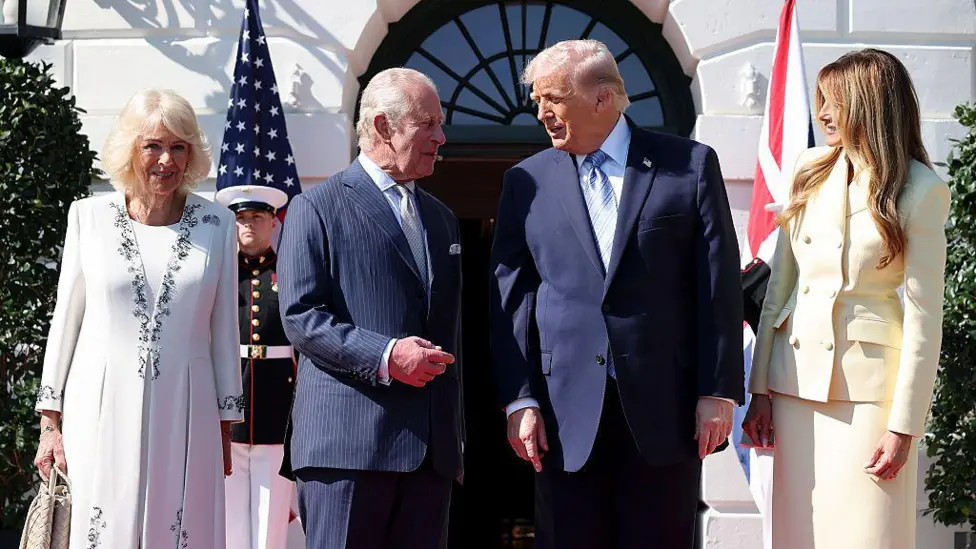
Diplomats aimed for the visit to improve the tone of the relationship, with Sir David Manning, a former UK ambassador to the US, characterising the King as a "stabiliser" capable of fostering a better climate for engagement with a potential future Trump administration. The King's two speeches, delivered with notable charm, praised the US and its leadership, culminating in the diplomatic gesture of presenting President Trump with an "HMS Trump" ship's bell.
Republican Senator Lindsey Graham remarked that the King provided a "much needed morale boost" for US politicians, acknowledging the unusual nature of a unifying sentiment emanating from the British monarch. The King gently reminded Americans of their shared heritage, referencing "the living mosaic of the United States" and describing both nations as "vibrant, diverse and free societies."
Challenging 'America First'
Beyond the ceremonial pleasantries, the King advanced concrete arguments. He underscored NATO's post-9/11 support for the US and its ongoing role in a "complex and contested world." He called for "unyielding resolve" in the "defence of Ukraine" and championed "the international rules that have allowed us to trade and have kept power in balance for 80 years" – principles frequently undermined by Trump's administration.
His direct assertion that "The challenges we face are too great for any one nation to bear alone" explicitly challenged the core tenets of Trump's 'America First' ideology. The King repeatedly emphasised the Atlantic partnership, built on "twin pillars: Europe and America," as being "more important today than it has ever been." He expressed hope that this alliance would continue to defend shared values and urged against becoming "ever more inward-looking."
The visit's ultimate success hinges not on the well-executed ceremonies, but on whether the personal warmth between the King and the US President can translate into a more stable intergovernmental relationship. This will necessitate the UK avoiding politically expedient criticisms of Trump and potentially increasing defence spending. Brett McGurk, a former Middle East adviser, highlighted the need for British "hard power" alongside the King's "soft power," particularly concerning Ukraine and maritime security in the Strait of Hormuz.
The true test will be if a future US administration, particularly under Trump, re-evaluates the value of alliances or continues an independent course. The King's visit clearly articulated an "Alliance First" message, leaving the onus on political leaders to act upon it.